

Chinese brave war in Iraq, earn fame and money

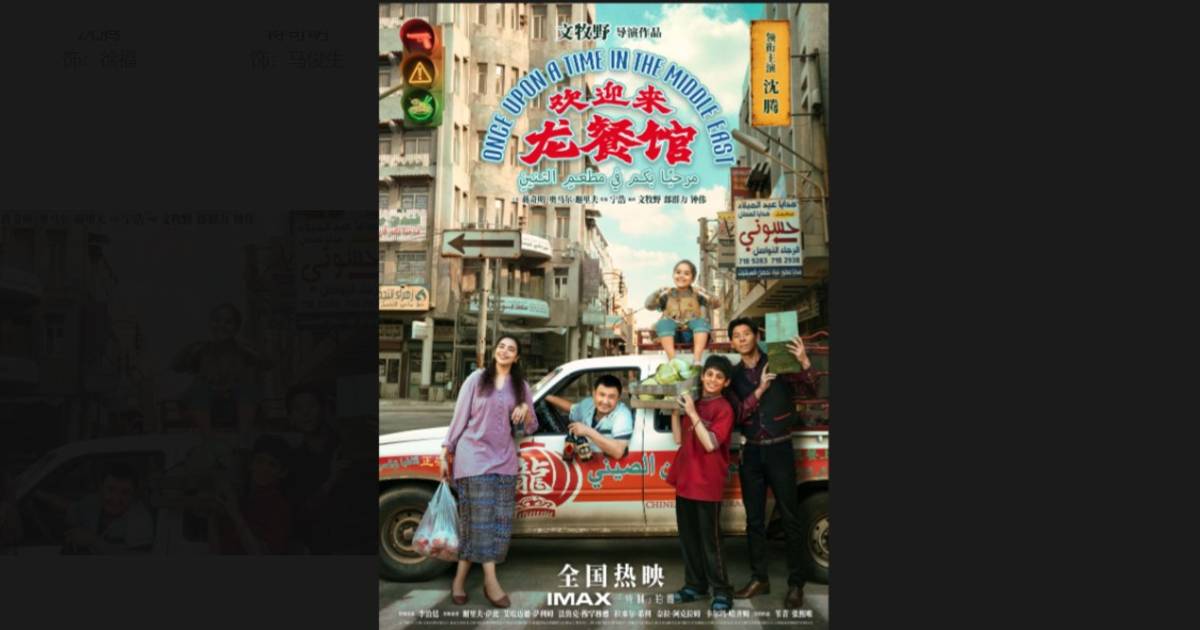
Since mid-August, thousands of people all over the country have been enjoying a dramatic film about a Chinese chef who works in war-torn Iraq and is imprisoned by both the U.S. army and jihadi rebels.
“Once Upon a Time in the Middle East” (歡迎來到龍餐館) was released on August 11 and grossed one billion yuan in eight days, ranking top of the film charts.
The story is based on the lives of two remarkable Chinese. One is Chen Xianzhong (陳憲忠). He was born into the family of a railway worker in Jilin. During the Cultural Revolution, he joined the PLA.
On leaving the army, he went to Beijing University and studied Arabic. In 1984, he went to Iraq to work for a Chinese construction company. Among the Chinese, Arabic-speakers were few and he was much in demand.
In 2000, he left the company and went into the import-export business on his own account. He prospered. But, in March 2003, the U.S. army invaded Iraq. On April 9, it captured Baghdad and President George Bush declared the war over on May 1. Then followed an insurgency.
Chen resumed his trading business and opened a Chinese restaurant close to the National Theatre. Then he opened another one in the Green Zone, the most secure district of the city that was home to the U.S. embassy and the residences of senior U.S. civil and military officials.
With the aim of making the best Chinese restaurant in the history of Iraq, he imported four containers of flour, flavourings, pickled cabbage and the specialised equipment needed for a Chinese kitchen. He set out 400 tables.
Business boomed, especially from the Americans and those who worked for them. There was no such high-quality food was elsewhere , as well as liquor that was unavailable in other Iraqi hotels and restaurants.
But, in 2004, a group of Chinese workers were kidnapped by the insurgents. Chen managed to secure their release but two of his four Chinese chefs were so frightened that they returned to China. The new government imposed higher taxes on alcohol.
In March 2005, while he was driving to the vegetable market, his car was blocked by a Volkswagen. Three armed men got out, pinned him to the back seat and said they wanted him, not his money.
Fortunately, armed residents who recognised him came on the streets and started firing on the kidnappers – they ran away. Chen needed two days of hospital treatment in Baghdad and then returned to China for a month of rehabilitation. To everyone’s surprise, he went back to Baghdad in May that year. From then on, he never went outside without armed escort.
In 2008, after further robberies and bombing of his premises, he left Baghdad for the comparative safety of northern Iraq, under Kurdish control, and resumed his restaurant business. He kept an AK-47 under his table.
“There is no safety here,” he said. “I could lose my life at any moment. But I cannot leave behind everything I have built here. I love this country. It was in Baghdad that I made my first fortune, in U.S. dollars.”
The other remarkable Chinese was Liu Lei (劉雷). A native of Hunan, he moved to Shenzhen as a teenager. By 2003, he was earning 100.000 yuan a year in a software company and had a wife and family.
But, in July 2023, just as all the foreigners were leaving Iraq, he took US$3,500 – nearly all his savings – and made his way to Amman, capital of Jordan. Then he drove on “The Highway of Death” to Baghdad.
He also opened a restaurant in the Green Zone. Business flourished, especially for whiskey, with a mark-up of 300 per cent. He was making a daily profit of US$3,500. The best customers were American soldiers who dared not eat outside the zone and craved for whiskey.
By late 2004, security was deteriorating and business with it. So, with his Chinese partner, he returned home, having sent back 3.08 million yuan over the 18 months.
Asked why he had gone, Liu said that he was restless in Shenzhen and wanted to gamble on earning a large sum that he could not earn at home.
In the film, the hero is Xu Fu, a cook who, like Chen, came from northeast China. He is a composite of the two men. The producers built an Arab city on over 100,000 square metres in a film studio in Qingdao, eastern China, They also filmed in the western regions of Ningxia and the Gobi for a prison camp where the insurgents held Xu and children he was protecting.
The producers also shot scenes in the Egyptian Sahara, to catch the scenery they wanted.
The film has a great deal of violence, perpetrated by both the Americans and the insurgents. This is offset by the warm human relations between Xu, his Chinese colleagues and the children they look after.
The film never mentions Iraq or Baghdad by name. Author and director Wen Muye said that he did want to limit it to any particular war in history. “The film has timeless and universal human themes. It could be played out in the present day,” he said.
-
How should leaders govern the people? Michael Chugani
A senior Mainland official once advised Donald Tsang Yam-kuen when he was the chief executive to think like the people do. It was good advice. Leaders who want to effectively serve the people need to
-

Hong Kong Tourism Board Unveils ‘Only in Hong Kong’
The Hong Kong Tourism Board (HKTB) launched ‘Only in Hong Kong’, a new global campaign that redefines how the city is experienced and differentiating Hong Kong as Asia’s World City. Moving beyond a
-
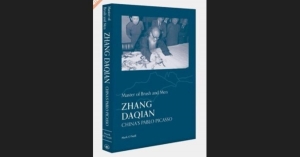
Zhang Daqian, China's Best Painter for 500 Years Mark O'Neill
At Sotheby’s art auction in Hong Kong in April this year, it put on sale three works by Zhang Daqian ( 張大千). One of them, Sunshine after Rain (雨後斜陽), sold for HK$15.36 million. It was evidence that,
-
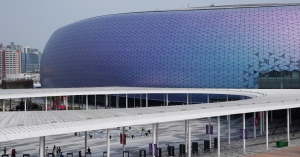
Government celebrates success of Kai Tak Sports Park Mark O'Neill
The Hong Kong government is celebrating the success of the Kai Tak Sports Park which opened in March last year – nearly 600,000 people have attended major sports events there. In a written reply in