
Foreign firms welcome end of Zero-Covid, uncertain of future


With the abrupt end of the zero-Covid policy, Beijing hopes to bring economic growth back to its levels before the pandemic and confirm its position as “the factory of the world”.
Foreign companies welcomed the change in policy, for which they have been calling for months, but warn of many challenges ahead that hamper their development in China.
The pandemic and China’s support for Russia’s invasion of Ukraine have been bitter lessons for foreign investors and persuaded many to develop two supply chains – one for goods to be sold in China and one for those sold elsewhere.
Joerg Wuttke, chairman of the European Chamber of Commerce in China, said: “The announcement (of ending Zero-Covid) was overdue but most welcome. China is rejoining the world. The open question is whether there will be new mutations and will China all of a sudden be considered the hotspot for viruses. All of these remain to be seen. We are not out of the woods. It still shows that China is only stepwise opening up to the outside world, where inside China it seems to be opening the floodgates.”
He said that the investment mood would not change in the short term.
“As China currently undergoes a paradigm shift in dealing with the Covid-19 pandemic, businesses are likely to wait to see how the situation on the ground unfolds in the coming weeks before making long-term decisions about their investments in China. I do not expect improvement in the economy until spring. Until then, it is a long way for many companies. Will they survive financially?”
The British Chamber of Commerce in China also welcomed the change in policy but said that a record 42 per cent of firms were pessimistic about prospects for 2023. “The Chamber calls for a clear path to a more stable and predictable business environment, implemented consistently and clearly across all levels of government so that businesses can plan with greater certainty and less disruption,” it said.
Its most recent survey found a substantial drop in the ability of companies to recruit enough of the talent they needed. “The top three regulatory challenges facing British businesses in 2022-23 are employing foreign staff; transparency of the business environment; navigating cyber security and IT regulations,” it said.
Michael Hart, chairman of American Chamber of Commerce in China, said that, in a survey of nearly 200 AmCham China members from December 16 to 19, more than 60 per cent of respondents expected the impact of the latest Covid outbreak to be over in one to three months.
“Respondents did not report major supply chain issues. Many companies are likely to keep more inventory on hand after disruptions from the Shanghai lockdown earlier this year. Most respondents said at this time they were unable to predict the long-term impact of the outbreak on their business. As for foreign direct investment into China, it would take about a year after travel fully reopens for such investment to start recovering,” he said.
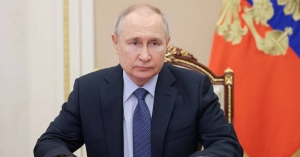
The three years of the pandemic have seen other negative changes for foreign investors. One is Vladimir Putin’s invasion of Ukraine and China’s support for it. Western companies were forced to withdraw from their investments in Russia, at enormous cost. Western governments moved to reduce their dependence on the Russian energy market and imposed heavy sanctions.
Were Beijing to attack Taiwan –possibly leading to a war with the United States – the same scenario would be repeated, with worse consequences for Beijing and Western firms, whose investments in China are larger than those in Russia.
The lesson is to make two supply lines – one for goods to be sold in China and the other for goods to be sold elsewhere. “There is a large-scale rethinking of logistics operations across the auto industry,” said Ted Cannis, a senior executive at Ford. Car manufacturers plan to make parts and cars inside China exclusively for use within the country.
The other change is the worsening Cold War between the U.S. and China and the efforts by many in the Biden administration to decouple, especially in high technology sectors.
The director of a U.S. consultancy firm based in Beijing said the atmosphere in Washington was toxic and increasingly resembled the era of Joseph McCarthy. His firm was nervous to accept Chinese clients, even those in non-sensitive, non-military sectors, for fear of being targeted. “All firms are Huawei. The winners in all this are the arms manufacturers. The U.S. defence budget continues to grow and these firms profit from more sales to the US military and Taiwan.”
U.S. firms in China are trapped between deepening and improving their business in the country and a fear of being attacked by their own politicians for being too close to Beijing.
-- Contact us at [email protected]
-
How should leaders govern the people? Michael Chugani
A senior Mainland official once advised Donald Tsang Yam-kuen when he was the chief executive to think like the people do. It was good advice. Leaders who want to effectively serve the people need to
-
Hong Kong Tourism Board Unveils ‘Only in Hong Kong’
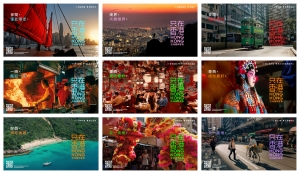
The Hong Kong Tourism Board (HKTB) launched ‘Only in Hong Kong’, a new global campaign that redefines how the city is experienced and differentiating Hong Kong as Asia’s World City. Moving beyond a
-
Zhang Daqian, China's Best Painter for 500 Years Mark O'Neill
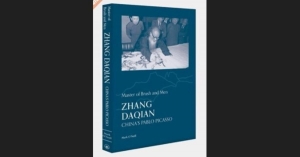
At Sotheby’s art auction in Hong Kong in April this year, it put on sale three works by Zhang Daqian ( 張大千). One of them, Sunshine after Rain (雨後斜陽), sold for HK$15.36 million. It was evidence that,
-
Government celebrates success of Kai Tak Sports Park Mark O'Neill
The Hong Kong government is celebrating the success of the Kai Tak Sports Park which opened in March last year – nearly 600,000 people have attended major sports events there. In a written reply in