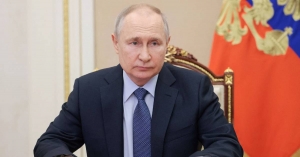

China’s smart city challenge


According to a World Bank analysis back in 2000, the larger the urban population, the more prosperous the economy and the higher personal income would be.
The analysis is still true today. A study last year by an Indian government think tank and the Asian Development Bank found that after accounting for factors such as age, gender, education, type of worker (i.e. regular versus casual), industry, and more, in 2011, the average monthly income of full-time salaried workers in India's cities with 1.5 million or more inhabitants was, on average, 16% higher than in small cities and about 36% higher than in rural areas.
No wonder countries around the world are committed to promoting urbanisation, and China's accomplishment is even more obvious. In 1978, the country’s national urbanisation was only 17%, by 1996 it had increased to 30%, and by the end of 2022, it reached 65%, higher than the world average of 56%.
As early as 2014, the central government announced the development directives, main objectives and key tasks of smart cities through a number of policy documents. Many cities have closely followed the central government's policies with Beijing, Shanghai, Guangdong, Nanjing and other provinces and cities having taken the lead in including smart cities as their construction priorities. According to 2014 statistics, at that time, all cities at or above the sub-provincial level, 89% of cities at the prefecture level and above, and 47% of cities at the county level and above proposed to develop as smart cities.
Smart cities have now become a huge industry in the mainland. Data analysis firm IDC estimates that in 2022, investment in the smart city market led by the Chinese government will be US$21.4 billion, up 21% from 2021, and is expected to approach US$40 billion by 2026.
What are the main objectives to be achieved with the huge investment?
The mainland website for local industry practitioners "Smartcity.Team" sorted out more than 3,000 pieces of information on the winning tenders of provincial, municipal and district-level governments and state-owned enterprises in the first half of 2022 which won government allocation of fund amounting to about RMB78 billion, and found that the projects covered various categories of smart cities, including government affairs, transportation, community, water supplies, emergency response, education, medical care, and more.
The top three provinces with the largest funding allocation were Sichuan (RMB 8.4 billion), Shandong (RMB 8.3 billion) and Guangdong (RMB 6.9 billion). Investment focused on smart cities and operation centers (RMB10.5 billion), government affairs-related, such as government cloud and government informatisation (RMB 8.5 billion), and transportation (RMB 6 billion).
However, China's urbanisation development has faced many challenges in recent years, one of which is how to make use of the relatively perfect infrastructure to benefit citizens, that is, the practicality and effectiveness of scenario-based applications commented by IDC. The report says that the current construction of some smart city scenarios lacks actual demand, and there is still much room for improvement in practicality and effectiveness.
To address the issue, the analysis firm proposes to establish a "standard, performance management and development evaluation system" to promote the transformation of the development model so as to enhance the economic and social benefits of the investments.
-- Contact us at [email protected]
-
How should leaders govern the people? Michael Chugani
A senior Mainland official once advised Donald Tsang Yam-kuen when he was the chief executive to think like the people do. It was good advice. Leaders who want to effectively serve the people need to
-
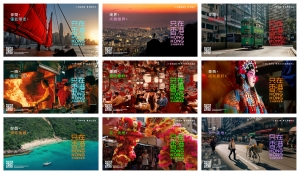
Hong Kong Tourism Board Unveils ‘Only in Hong Kong’
The Hong Kong Tourism Board (HKTB) launched ‘Only in Hong Kong’, a new global campaign that redefines how the city is experienced and differentiating Hong Kong as Asia’s World City. Moving beyond a
-
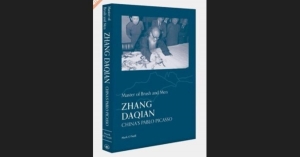
Zhang Daqian, China's Best Painter for 500 Years Mark O'Neill
At Sotheby’s art auction in Hong Kong in April this year, it put on sale three works by Zhang Daqian ( 張大千). One of them, Sunshine after Rain (雨後斜陽), sold for HK$15.36 million. It was evidence that,
-
Government celebrates success of Kai Tak Sports Park Mark O'Neill
The Hong Kong government is celebrating the success of the Kai Tak Sports Park which opened in March last year – nearly 600,000 people have attended major sports events there. In a written reply in