

In Xi’s China, security trumps economy


In the China of President Xi Jinping, security trumps economy. This means that the government is unlikely to meet its 2023 growth target of five per cent.
The large stimulus package that would be needed to kick-start the economy would mean taking money from areas that Xi regards as his priorities – defence, internal security and high technology. He is not willing to compromise.
“Xi’s primary goal is not necessarily growth. It is about security, stability, wealth distribution and common prosperity,” said Joerg Wuttke, former chairman of the European Chamber of Commerce in China. “They go more for stability and are willing to pay an economic price for it. So it is the end of an era.
“Politics has made China a more difficult place to do business. We were seeing a massive politicisation of business. In the first six months of 2023, we saw a very strong emphasis on ideology -- President Xi mentioned Marx far more than markets,” he said.
In the first half of this year, China’s GDP grew by 5.5 per cent over the same period in 2022. Its target for the full year is about five per cent. At his speech at the ASEAN summit last week (September 6), Premier Li Qiang said he was confident China would achieve the five-per-cent target.
In July, China’s fiscal revenue rose 1.9% year on year, slowing from a 5.6% increase in June. Fiscal expenditure fell 0.8% in the same period, narrowing from a 2.5% decline a month earlier, according to calculations based on official data.
In August, Barclays cut its full-year GDP forecast from 4.9 per cent to 4.3 per cent because of a faster-than-expected deterioration in the housing market. “The weaker-than-expected growth momentum in major economic indicators suggest that our forecast of 4.9 per cent is becoming increasingly difficult to reach. The real estate sector remains a big drag on the economic recovery and the consumption recovery stalled among rising unemployment,” it said.
During the era of President Hu Jintao from 2002 to 2012, the slogan was “保八” (bao ba, guarantee eight)-- the government considered eight per cent the minimum GDP growth to keep unemployment at a manageable level and ensure social stability.
The most important vehicle for this was the real estate industry and its related sectors, which accounted for 20-25 per cent of GDP growth.
Xi takes a different view. He said that houses were “for living, not speculation.” He wants to dispose of the 60-80 million empty apartments in China and make housing more affordable to the poor and the young.
So the government is ready to see the property sector shrink as a necessary adjustment. It also wants to reduce the heavy infrastructure spending that was the main method of previous governments to stimulate the economy. It wants the new drivers of growth to be consumer spending, high-tech manufacturing and green energy.
Another pillar of growth during the eras of Hu and his predecessors was exports. But this August China’s exports fell 8.8 per cent compared with a year earlier, marking their fourth consecutive month of decline. In July, they fell 14.5 per cent, the worst drop since the start of the pandemic.
Another change is the status of the private sector, which was the fastest creator of wealth and employed a majority of the urban workforce during the reform era.
Xi is a loyal Marxist who believes that state companies must dominate the economy. In the Soviet Union and the Russia that replaced it in 1991, the Communist Party sold state assets to private companies and lost its ability to control the economy and society. For Xi, it is the textbook example of what not to do.
The government has greatly reduced the wealth and power of leading private entrepreneurs, who threatened to become the Chinese equivalent of the Russian oligarchs.
This has frightened the private sector, making entrepreneurs reluctant to invest and hire new staff because they cannot predict the future.
One result of the economic slowdown is rising unemployment, especially among the urban young between 16 and 24. The rate in June reached a record 21.3 per cent. Since then, the government has stopped publishing the figure, because it is too high.
So how to ensure social stability? During the COVID pandemic, the government practised and implemented new and sophisticated methods of social control. If necessary, it will use these to deal with the negative effects of the slowdown.
According to the Nikkei newspaper in Japan, a group of party elders attended the Beidaihe gathering in August and held a face-to-face meeting with Xi and other current leaders.
“The message was that, if the political, economic and social turmoil continues without effective counter-measures being taken, the party could lose public support, posing a threat to party rule. ‘We cannot have more turmoil’, the elders said.”
In response, according to Nikkei, Xi said he was dealing with issues left by three previous leaders – Deng Xiaoping, Jiang Zemin and Hu Jintao – and that he had spent the last decade tackling them but they remained unresolved. ‘Am I to blame?’ he said.”
-- Contact us at [email protected]
-
How should leaders govern the people? Michael Chugani
A senior Mainland official once advised Donald Tsang Yam-kuen when he was the chief executive to think like the people do. It was good advice. Leaders who want to effectively serve the people need to
-
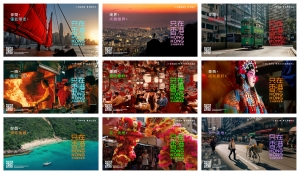
Hong Kong Tourism Board Unveils ‘Only in Hong Kong’
The Hong Kong Tourism Board (HKTB) launched ‘Only in Hong Kong’, a new global campaign that redefines how the city is experienced and differentiating Hong Kong as Asia’s World City. Moving beyond a
-
Zhang Daqian, China's Best Painter for 500 Years Mark O'Neill
At Sotheby’s art auction in Hong Kong in April this year, it put on sale three works by Zhang Daqian ( 張大千). One of them, Sunshine after Rain (雨後斜陽), sold for HK$15.36 million. It was evidence that,
-
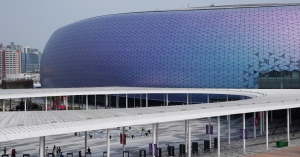
Government celebrates success of Kai Tak Sports Park Mark O'Neill
The Hong Kong government is celebrating the success of the Kai Tak Sports Park which opened in March last year – nearly 600,000 people have attended major sports events there. In a written reply in