

The world’s shrinking labour force


Labour shortages are widespread across major economies. Thanks to an ageing population and a shift in attitudes towards immigration, labour shortage are here to stay, with profound implications for the global economy and for financial markets.
This trend pre-dates Covid, but has undoubtedly been given added momentum by the pandemic. We expect this trend to continue, dampening prospects for economic growth both in China and, at the margin, the rest of the world (recall that China has accounted for more than a third of global GDP growth over the past 10 years, three times more than US’s contribution). Our analysis suggests that the adverse demographic changes will cost China 0.2 percentage points in GDP growth per year. However its economy will continue to see a boost from ongoing urbanisation and improving education levels. At the same time, the simple maths of economic catch-up –
China’s GDP per capita in PPP is some four times lower than the US.
We forecast China to grow around 5 per cent per year over the next five years –above our trend
growth estimate of 4.6 per cent, and faster than all other major economies. China still has the potential to over-take the US as the biggest economy in the world in the next decade (in current US dollars) –well ahead of IMF’s forecast for that to happen only in 2038.
India’s advantage
If China’s demographics have turned negative for global growth, India’s trajectory is different.
India’s population has overtaken China’s this year –a remarkable outcome given that it was 200 million below just 20 years ago –and, more importantly, its share of working age to total population will continue to rise till the mid-2030s on UN estimates.
Supportive demographics, economic reform agenda and low leverage will make India the fastest growing big country, with real GDP growth of 6.3 per cent over the next five years and make India’s equity market one of the most attractive, albeit admittedly not cheap.
Below potential
Globally, the key question is whether this shortage of labour will affect global economic growth and inflation over the next decade or will result only in a redistribution of wealth from one sector or region to another. We believe both trends will play out.
We expect economic growth to fall short of potential over the next five years (averaging 1.2 per cent vs a potential growth rate of 1.5 per cent in developed economies), while inflation will decline only slowly.
Labour shortages mean we also expect wage growth to outstrip overall price inflation over the next five years, resulting in a redistribution of wealth from business to workers as corporate margins fall to accommodate higher wage bills.
Robots to the rescue?
Increased productivity is the ultimate, growth-friendly solution to labour shortages. Automation is often heralded as the route to improved productivity. The good news is that the world is
increasingly embracing machines. Supply of industrial robots has already almost doubled since 2015 and World Robotics forecast a CAGR of 7.5 per cent over the next five years. Investment in artificial intelligence (AI) is also growing rapidly. For businesses, automation is obviously even more attractive in a world of wage inflation and long-term sickness.
We believe AI remains the world’s best chance to boost productivity over the coming decades.
Particularly as there are signs that tech innovation more broadly is losing momentum.
Asset implications
The investment repercussions of labour shortages could be profound. We believe the demographic backdrop translated into weaker prospects for equities and other risk assets – for two main reasons: slower economic growth and the aging population that tends to be less risk averse.
As the proportion of older people grows we would thus expect to see a drag on price-to-earnings ratios and on equity valuations more generally.
The shrinking of the global workforce points to lower returns from mainstream asset classes over the medium term. It is one reason why we expect global equities to deliver annualised returns that are just half the long-term average over the next five years, or some 3-4 per cent per year in real terms.
-- Contact us at [email protected]
-

How should leaders govern the people? Michael Chugani
A senior Mainland official once advised Donald Tsang Yam-kuen when he was the chief executive to think like the people do. It was good advice. Leaders who want to effectively serve the people need to
-

Hong Kong Tourism Board Unveils ‘Only in Hong Kong’
The Hong Kong Tourism Board (HKTB) launched ‘Only in Hong Kong’, a new global campaign that redefines how the city is experienced and differentiating Hong Kong as Asia’s World City. Moving beyond a
-

Zhang Daqian, China's Best Painter for 500 Years Mark O'Neill
At Sotheby’s art auction in Hong Kong in April this year, it put on sale three works by Zhang Daqian ( 張大千). One of them, Sunshine after Rain (雨後斜陽), sold for HK$15.36 million. It was evidence that,
-
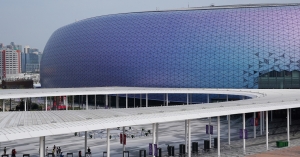
Government celebrates success of Kai Tak Sports Park Mark O'Neill
The Hong Kong government is celebrating the success of the Kai Tak Sports Park which opened in March last year – nearly 600,000 people have attended major sports events there. In a written reply in