

Too many typhoon suspensions?


No one can control natural disasters but that does not mean we cannot handle them in a smarter way.
Almost every time a typhoon hits Hong Kong, there will be guaranteed finger-pointing to the government – whether it was the tree or taxi or some other thorny issue.
Such was the case for passengers stranded for hours because all rail and bus services were suspended under Typhoon Koinu, a slow tropic storm that lasted for four days but jumped to No.9 at one point with only 15 minutes pre-warning.
Many tourists lined up for more than three hours in the airport waiting to be transported and many locals stuck in the MTR station found they were better off booking a nearby hotel than paying for the crazy taxi fares.
The skyrocketing taxi fares seemed unavoidable given the taxi drivers risked their lives and the lack of insurance coverage under the extreme weather.
Unfortunately, it came at an especially bad time towards the end of the golden week, when Hong Kong has been desperate to please mainland tourists to revive the unexciting local economy.
To the government’s credit, the Hong Kong Observatory has shown improvement in managing public expectations, evidenced by an unusual 12-hour pre-warning before Sunday’s midnight that informed the public that typhoon No.8 would be hosted till 11:40 am on Monday.
But even so, there was still a chaos because no public transport was available until after the typhoon subsided.
My take is simple: do we have too many typhoon suspensions?
Living in the middle of Hong Kong Island, I think I was lucky to be relatively unaffected by the typhoons (including Typhoon No. 10 Saola on Sept 1) and the unexpected black rainstorm on September 8.
Well, no one predicts the weather well but many people including myself felt the suspension was too long. A former Hong Kong Observatory staff noted only Cheung Chau among the 10 district spots experienced the kind of heavy wind under Typhoon No.8 last Sunday.
I cannot help feeling the government had played safe and did not want to upset the high public expectation to get a day off (although many felt that the work-from-home habit developed during the pandemic took away its usual joy).
With the extreme weather, Hong Kong lost eight trading days in the past 15 months, according to a local paper. That explains why Hong Kong Exchanges & Clearing instructed a task force to submit a workable plan that would keep financial markets open during typhoons.
I believe the loss of productivity does not help the local economic rebound.
-- Contact us at [email protected]
-
How should leaders govern the people? Michael Chugani
A senior Mainland official once advised Donald Tsang Yam-kuen when he was the chief executive to think like the people do. It was good advice. Leaders who want to effectively serve the people need to
-
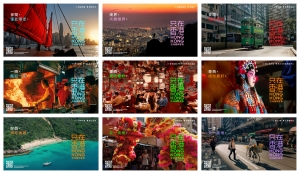
Hong Kong Tourism Board Unveils ‘Only in Hong Kong’
The Hong Kong Tourism Board (HKTB) launched ‘Only in Hong Kong’, a new global campaign that redefines how the city is experienced and differentiating Hong Kong as Asia’s World City. Moving beyond a
-

Zhang Daqian, China's Best Painter for 500 Years Mark O'Neill
At Sotheby’s art auction in Hong Kong in April this year, it put on sale three works by Zhang Daqian ( 張大千). One of them, Sunshine after Rain (雨後斜陽), sold for HK$15.36 million. It was evidence that,
-
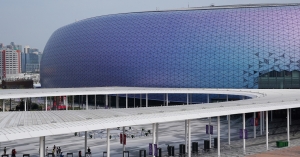
Government celebrates success of Kai Tak Sports Park Mark O'Neill
The Hong Kong government is celebrating the success of the Kai Tak Sports Park which opened in March last year – nearly 600,000 people have attended major sports events there. In a written reply in