

Challenges of PropTech


A number of serious and even fatal construction accidents have aroused widespread concern in the community last year. Therefore, it is timely for the Housing Bureau and the Housing Department to introduce smart technologies to solve the difficulties in supervising the construction and maintenance work, and to ensure the repairing and managing the safety of construction workers through the use of internet of things (IoT) sensors and artificial intelligence (AI).
As pointed out by the Secretary for Housing, Winnie Ho, the average age of construction workers in Hong Kong is now as high as 55 years, and the use of technology can alleviate manpower shortage and improve efficiency in face of general ageing and shortage of workers in the industry.
Technological applications that can reduce manual labor processes and help reduce worker safety risks include precise positioning of modular integrated construction (MiC), multifunctional indoor construction robots to perform skim coating, grinding, and painting works, as well as 5G remote crane control systems. In terms of daily management, an AI predictive maintenance system is used to improve inspection efficiency and reduce lift downtime. A mobile thermal camera can be used to detect problems such as objects thrown from height, littering, feeding of wild pigeons, and illegal parking jams at problematic locations.
Today, with the spread of global urbanisation, these property technologies (PropTech) have become popular in recent years. PropTech generally refers to the use of technology to solve the problems of the entire life cycle of the real estate industry, from construction process, housing sales and leasing, to property maintenance and management, and more, covering industrial, retail, office and residential buildings.
In addition to saving manpower and improving efficiency, the use of advanced technology can also save energy and reduce emissions, and promote sustainable development. According to the World Green Building Council, 39% of the world's greenhouse gas emissions come from buildings. In densely populated Hong Kong, this is even more, reaching above 60%.
In the context of climate change and the post-COVID recovery, reducing carbon emissions and improving indoor environmental quality have become the focus of PropTech. It's no wonder that a newly released market research report predicts that the global PropTech market will grow from US$19.5 billion in 2022 to US$32.2 billion by 2030, at a CAGR of 6.5%.
However, a study by the Center for Real Estate at the Massachusetts Institute of Technology in the United States found that there are a number of obstacles to the implementation of PropTech, mainly the difficulty of integrating with existing technology and business processes, as well as the challenge of gaining the confidence and support of owners/property management companies and occupiers.
For example, many PropTechs use sensors to monitor energy use, air quality, temperature, natural light, waste and recycling, and use AI to optimise heating and cooling equipment in order to find the best way for electricity consumption. But no matter how beautiful the idea looks, if it is not compatible with the existing building management system (BMS), it will be nothing more than words. The study also cites a 2019 global survey by consultancy KMPG, which showed that only 17% of PropTech solutions can be seamlessly integrated. Therefore, aspiring startups must pay more attention to this aspect.
-

How should leaders govern the people? Michael Chugani
A senior Mainland official once advised Donald Tsang Yam-kuen when he was the chief executive to think like the people do. It was good advice. Leaders who want to effectively serve the people need to
-

Hong Kong Tourism Board Unveils ‘Only in Hong Kong’
The Hong Kong Tourism Board (HKTB) launched ‘Only in Hong Kong’, a new global campaign that redefines how the city is experienced and differentiating Hong Kong as Asia’s World City. Moving beyond a
-

Zhang Daqian, China's Best Painter for 500 Years Mark O'Neill
At Sotheby’s art auction in Hong Kong in April this year, it put on sale three works by Zhang Daqian ( 張大千). One of them, Sunshine after Rain (雨後斜陽), sold for HK$15.36 million. It was evidence that,
-
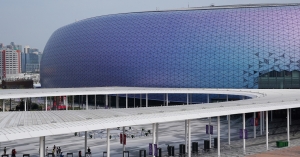
Government celebrates success of Kai Tak Sports Park Mark O'Neill
The Hong Kong government is celebrating the success of the Kai Tak Sports Park which opened in March last year – nearly 600,000 people have attended major sports events there. In a written reply in