
China rolls out red carpet for foreign CEOs – will it work?


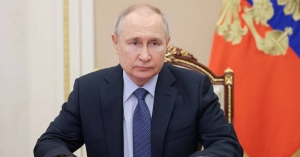
This week China rolled out the red carpet for dozens of Western chief executives and insisted that its reform and open-door policies would continue and they had an important role in its future.
On Wednesday President Xi Jinping met 20 U.S. CEOs and major business figures in the Great Hall of the People, his first such meeting in four months, and told them that China’s economy had not peaked and its growth prospects were bright.
Last year Foreign Direct Investment (FDI) into China fell to its lowest level for 30 years. Many foreign economist doubt that China will achieve its 2024 GDP growth target of five per cent, compared to an actual 5.2 per cent last year.
“This leadership is willing to sacrifice economic growth for the sake of ideology,” said Joerg Wuttke, Emeritus Chairman of the European Chamber of Commerce in China. “In the past, China did anything to add economic growth because the Party believed it was necessary to stay in office. Now what keeps the party in office is utter, 110 per cent control.”
The CEOs were attending the China Development Forum (CDF), the country’s annual flagship annual business conference. Many EuropeanCEOs also took part. Among the visitors were senior executives from Blackstone, Bloomberg, Qualcomm, Pfizeer and Fedex.
They met several ministers and the exchanges were more direct than last year, according to those who attended.
But they did not meet Premier Li Qiang, as they had in previous years. After the cancellation of his news conference at the National People’s Congress, this was further evidence that he has limited power in setting economic policy and that this power lies with President Xi.
“China is planning and implementing a series of major steps for comprehensively deepening reform and steadily fostering a market-oriented, law-based and world-class business environment,” Xi told the CEOs. “This will create broader room for development for U.S. and other foreign busineses. China’s reforms will not stall and our opening up will not stop. China’s development will not peak now.”
But many foreign businesses are not so optimistic. At a news conference earlier in March, Jens Eskelund, president of the EU Chamber of Commerce in China, called for immediate talks between Beijing and Brussels to avert trade tensions as European producers struggled to compete with dumped products.
“What we see right now is the unfolding of a slow-motion train accident. Over-capacity in Chinese industry is across the board. There is still a possibility of finding off-ramps and that’s what we hope,” he said.
China has 60 per cent of global manufacturing capacity, 31 per cent of global production and 14 per cent of global consumption. In cars, it sells 23 million per year and in 2023 exported three million. Its annual capacity is 41-50 million -- the 27 million is equal to the entire production of US and Europe.
In photovoltaic cells, China accounts for 80 per cent of global production and its capacity is 2.5 times global demand. In 2023, the EU installed 4,000 gigawatts of photovoltaic cells. The vast majority were made in China. Europe still has stocks of 80 gigawatts of the cells, meaning that it needs no imports for one or two years.
With demand weak at home, Chinese manufacturers have no alternative but to export their excess production if they want to stay in business. But, politically, the governments of Japan, the U.S. and Europe cannot allow such exports if they threaten their domestic producers.
Eskelund said that everyone at the CDF was looking for answers from policy makers on over-supply, the enormous debts of local government and the future of reform. “People are looking for pointers as to where China is going. The talk about unwavering commitment to reform and opening up – what is that going to mean in concrete terms?” he said.
Xi has repeatedly called for the development of “new quality productive forces”, which means high-technology manufacturing. During the reform era since 1980, about two-thirds of China’s investment has gone into property and infrastructure. But Xi does not want these sectors to be the main drivers of the economy in the future.
Reining them in means a fall in economic activity. The three-year trauma of Covid and the fall in property prices have made individuals reluctant to spend. Household savings are at record levels.
So there seems to be no alternative to a surge in exports to drive growth this year. Will China’s major trading partners allow it?
-
How should leaders govern the people? Michael Chugani
A senior Mainland official once advised Donald Tsang Yam-kuen when he was the chief executive to think like the people do. It was good advice. Leaders who want to effectively serve the people need to
-
Hong Kong Tourism Board Unveils ‘Only in Hong Kong’
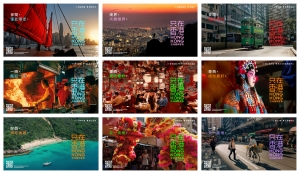
The Hong Kong Tourism Board (HKTB) launched ‘Only in Hong Kong’, a new global campaign that redefines how the city is experienced and differentiating Hong Kong as Asia’s World City. Moving beyond a
-
Zhang Daqian, China's Best Painter for 500 Years Mark O'Neill
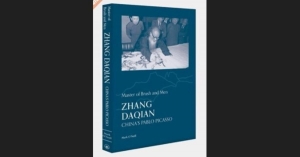
At Sotheby’s art auction in Hong Kong in April this year, it put on sale three works by Zhang Daqian ( 張大千). One of them, Sunshine after Rain (雨後斜陽), sold for HK$15.36 million. It was evidence that,
-
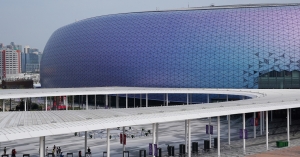
Government celebrates success of Kai Tak Sports Park Mark O'Neill
The Hong Kong government is celebrating the success of the Kai Tak Sports Park which opened in March last year – nearly 600,000 people have attended major sports events there. In a written reply in