

Taiwan sees Chinese invasion unlikely, fears blockade

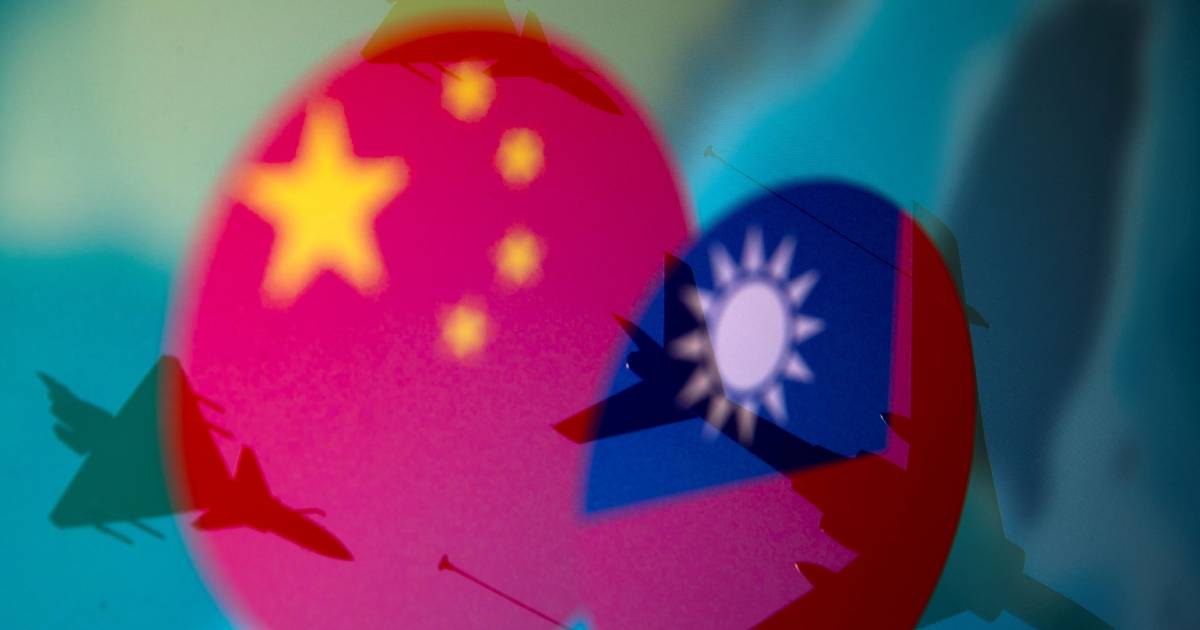
The government of Taiwan considers an attack by China very unlikely but fears a blockade, short of a shooting war, to which its allies might not react.
“China has too much to lose,” said Francois Wu Chih-Chung, Taiwan’s Vice Foreign Minister. “Attacking Taiwan would be extremely costly. A war would be pure madness.”
President Xi Jinping has said repeatedly Taiwan is a province of China and that reunification cannot be delayed indefinitely. Air and naval forces of the People’s Liberation Army carry out repeated exercises around the island, of increasing intensity.
Kung Shan-shun, a specialist of Taiwan’s Institute for National Defence and Security Research under the Ministry of Defence, said that, at the present, they estimated the probability of an attack at less than one per cent.
“Xi Jinping does not control sufficiently the military. Look at the power struggles in the chief of staff office and the many anti-corruption campaigns that have brought down several high-ranking generals,” he said.
“Despite the arrival of many new vessels, the PLA does not have enough ships to attempt a war across the Taiwan Straits,” he added.
This analysis is shared by Professor Jean-Pierre Cabestan, one of Hong Kong’s leading Sinologists and Senior Researcher Emeritus at the French National Centre for Scientific Research.
“While China’s navy and air force is more powerful than before, I find it difficult to imagine a Chinese attack between now and 2030, except in the case of the United States leaving the region,” he said.
He said that, in the event of a war, American thinktanks had predicted dozens of thousands of dead on both the Chinese and American sides in the first days of the war. “Despite Ukraine, we forget too quickly what is war. When you start one, it is very difficult to end it.”
Many in Taiwan believe that Beijing is more likely to choose a blockade, or, to be more accurate a quarantine of the island, because a fully fledged blockade is an act of war. In its exercises, the PLA has been practising such a naval and air blockade or quarantine but has not enforced it.
The PLA navy would surround the island and allow no vessels to enter or leave without its permission. This would be a strategy to get political concessions from the Taiwanese government, first of all an endorsement of the “92 consensus”, an understanding reached in 1992 and supported by the opposition, especially the KMT, according to which there is one China but each side keeps its own interpretation, suggests Cabestan.
Taiwan is heavily dependent on international trade, especially exports of electronics and semiconductors. Exports account for about 70 per cent of its GDP.
Such a quarantine would be “grey zone warfare”, a tactic China has successfully employed to broaden its control of the South China Sea. It is military operations short of actual war.
This would not be a declaration of war against the U.S. that would force it to intervene. If the Taiwan military opened fire on the blockading ships, Beijing could push the responsibility onto Taiwan.
The pearl of the island’s economy is the Taiwan Semiconductor Manufacturing Company (TSMC). It produces 90 per cent of the world’s most advanced semiconductors. Taiwan people call it the “Silicon Shield”, the island’s best defence.
They believe that, because so many countries and industries depend on TSMC’s chip, they cannot allow it to fall under the control of China.
Wu said that, because Taiwan had few embassies, it was obliged to do diplomacy through chips. “We are aware that we must give a little to the Americans, in order not to lose everything. The real danger is an invasion by China.”
In part to please President Donald Trump and his predecessor Joe Biden, TSMC is investing US$165 billion in major factories in Phoenix, Arizona, the biggest single foreign investment in U.S. history.
Such a large investment has worried the Taiwan people, who fear a transfer of technology and a weakening of their global position. “But the U.S. plants will make four-nanometres chips, while the latest generation are two-nanometres,” said Wu.
Audrey Fang Peng was Taiwan’s first Minister of Digital Affairs from August 2022 to May 2024. She is a computer software programmer.
She said that, if TSMC survived a Chinese conquest and was taken over by mainland firms, it would be unrealistic to imagine that they could run the company.
“These foundries are made up of pieces and machines of an extreme delicacy, which depend on a global network of assistance in real time. They use methods of production unique in the world that even the best Chinese specialists do not master. Without them, the production of chips would stop,” she said.
A 2024 Bloomberg report estimated the potential losses of a Chinese military operation against Taiwan at US$10 trillion, 10 per cent of global GDP. That would mean no more iPhones or chips for Nvidia to make AI and the shutdown of many automobile production lines.
Experts estimate that it would take 10 years to replace the production capacity of Taiwan.
-
How should leaders govern the people? Michael Chugani
A senior Mainland official once advised Donald Tsang Yam-kuen when he was the chief executive to think like the people do. It was good advice. Leaders who want to effectively serve the people need to
-

Hong Kong Tourism Board Unveils ‘Only in Hong Kong’
The Hong Kong Tourism Board (HKTB) launched ‘Only in Hong Kong’, a new global campaign that redefines how the city is experienced and differentiating Hong Kong as Asia’s World City. Moving beyond a
-
Zhang Daqian, China's Best Painter for 500 Years Mark O'Neill
At Sotheby’s art auction in Hong Kong in April this year, it put on sale three works by Zhang Daqian ( 張大千). One of them, Sunshine after Rain (雨後斜陽), sold for HK$15.36 million. It was evidence that,
-
Government celebrates success of Kai Tak Sports Park Mark O'Neill
The Hong Kong government is celebrating the success of the Kai Tak Sports Park which opened in March last year – nearly 600,000 people have attended major sports events there. In a written reply in