

Taiwan firms seek markets outside U.S., China

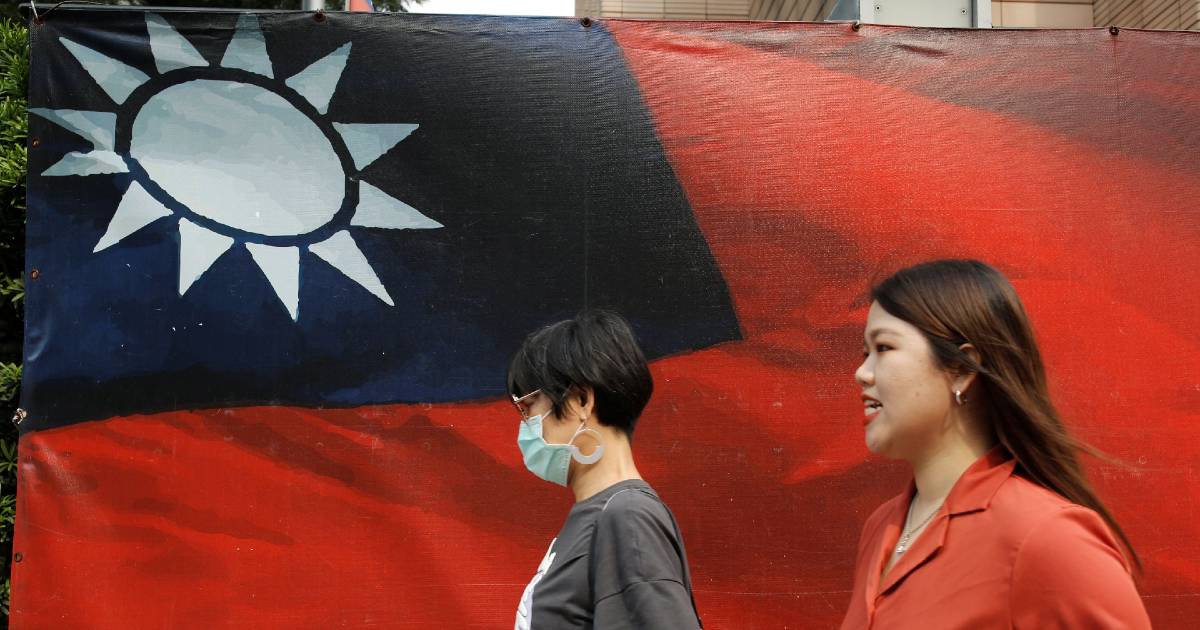
During the first Trump administration, YC INOX (允強實業), one of Taiwan’s largest stainless steel producers, began to invest in Turkey as a way to escape U.S. protectionism.
“Investment in Turkey was like a horror film,” said chairman Chang Kin-yu (張金鈺). “We had Covid, currency devaluation, an earthquake and soaring inflation.” It was the firm’s first overseas investment.
But it stayed and now has three plants in Turkey. “Five years from now, we will earn much more from those plants than those in Taiwan,” he said. “Without them, we would have shut down.”
Founded in 1973 in Changhwa, southwest Taiwan, YC INOX listed on the Taipei stock market in 1999. In 2024, it had revenue of NT$14.552 billion and losses of NT$103 million.
Like the rest of Taiwan’s business community, Chang was stunned when President Donald Trump announced in April a 32 per cent tariff on goods from the island. How could he do this to one of its closest allies in Asia and a major buyer of U.S. arms?
The U.S. is Taiwan’s second largest trading partner, after China. Washington and Taipei are still negotiating the final level for the tariffs. Exports account for 70 per cent of Taiwan’s GDP. It lives or dies by exports.
The July 8 issue of the Commonwealth magazine published a survey of 2,000 Taiwan CEOs on their reaction to the tariffs and the new Trumpian world.
Their conclusion was that they must find new markets outside the U.S. and China. A total of 45 per cent said they were considering new production in developing markets, against 29 per cent in Taiwan, 25 per cent in the U.S. and four per cent in China.
Asked where they would seek new sales, 56 per cent said they would look in developing markets, against 31 per cent in the U.S. and 20 per cent in China.
Asked if they would consider new production facilities in Taiwan over the next three years, 29 per cent said they would, down from 68 per cent in a similar survey last October.
One third said that, over the next three years, they would reduce their production in China or leave the country completely; 17 per cent said they would reduce sales in the U.S. or give up the market entirely.
Trump is targeting not only China but also factories in Southeast Asia that use a large proportion of Chinese parts and components. Many Taiwan firms chose a Southeast Asian country for its “China Plus One” production strategy.
The situation is particularly tough for Chang of YC INOX. From June 4, the U.S. imposed tariffs of 50 per cent of steel and aluminium from all countries except the U.K., which is paying a 25 per cent tariff.
His firm is one of the world’s biggest producers of stainless steel tubes. It earns 85 per cent of its revenue from exports to 70 countries.
Looking for its first overseas investment, Chang rejected Southeast Asia where it would have to compete with Chinese producers who sell at low prices.
He chose Turkey for its population of 85 million, rapidly growing economy, cheap land, educated workforce, substantial auto industry and consumption of stainless steel 25 per cent of that in Taiwan.
The Turkish plants are selling to customers in the European Union, the Middle East and Africa, as well as in Turkey itself. They are also preparing for the reconstruction of Ukraine after the war.
Another Taiwan firm that has reduced its dependence on the U.S. market and diversified is Bizlink Holdings (貿聯控股), which designs and manufactures interconnect products for cable harnesses.
It has factories in 38 countries, having doubled its income over five years, mainly through acquisitions.
In 2024, its income was NT$54.1 billion and its profit was NT$4.4 billion. Of income, 40 per cent came from Europe, followed by Asia and then the U.S. with 20 per cent.
Chairman Liang Hwa-tse (梁華哲) said: “With protectionism rising in many countries, companies find it very difficult to achieve high sales in a single market.”
-
How should leaders govern the people? Michael Chugani
A senior Mainland official once advised Donald Tsang Yam-kuen when he was the chief executive to think like the people do. It was good advice. Leaders who want to effectively serve the people need to
-
Hong Kong Tourism Board Unveils ‘Only in Hong Kong’
The Hong Kong Tourism Board (HKTB) launched ‘Only in Hong Kong’, a new global campaign that redefines how the city is experienced and differentiating Hong Kong as Asia’s World City. Moving beyond a
-
Zhang Daqian, China's Best Painter for 500 Years Mark O'Neill
At Sotheby’s art auction in Hong Kong in April this year, it put on sale three works by Zhang Daqian ( 張大千). One of them, Sunshine after Rain (雨後斜陽), sold for HK$15.36 million. It was evidence that,
-
Government celebrates success of Kai Tak Sports Park Mark O'Neill
The Hong Kong government is celebrating the success of the Kai Tak Sports Park which opened in March last year – nearly 600,000 people have attended major sports events there. In a written reply in