

China imports destroy German industry -- economists
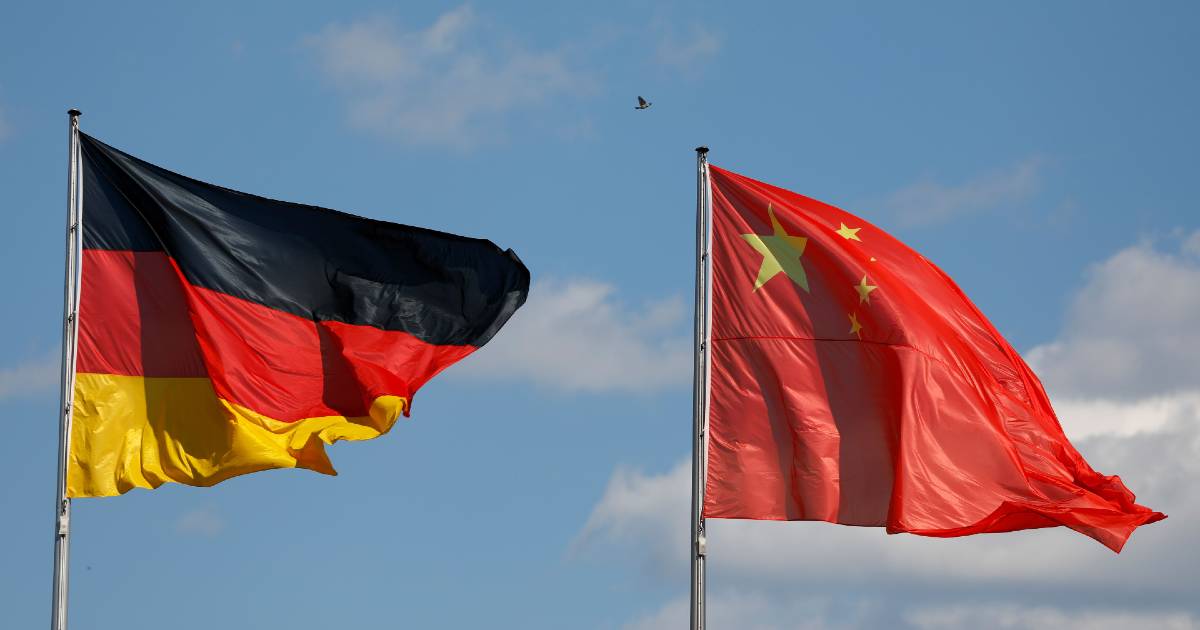
Chinese imports, subsidised by the state and an exchange rate kept artificially low, are destroying German industry, said two prominent German economists.
“Germany is currently losing 10,000 industrial jobs a month,” said Dennis Grimm, spokesman of the Executive Board of ThyssenKrupp, a German firm that is one of the world’s biggest steel producers.
“The entire industrial value chain is impacted – automotive, suppliers, chemicals and mechanical engineering. The 130-year success story of export-driven German economic growth is over,” he wrote in an article last month for WirtschaftsWoche, a German weekly business magazine.
In 2024, nine million tonnes of EU steel production were shut down.
“Economies like China and India which we industrialised with German technology over decades have become competitors – and, in China’s case, a systemic rival,” he said.
The most blatant example is subsidised exports of Chinese steel into Europe. Globally, there will soon be 700 million tonnes of overcapacity, six times the European Union’s total steel demand.
“A large portion comes directly or indirectly from China and is heavily subsidised – up to ten times more than the OECD average. We stand no chance against dumping on this scale,” he said. China and other non-European competitors can offer prices up to 50 per cent below the production costs of Thyssenkrupp.
The problem is compounded by a renminbi that is kept artificially low by the People’s Bank of China, said Jurgen Matthes, an economist the German Economic Institute based in Cologne.
In a paper for the Institute published last month, he said that, between early 2020 and this year, producer prices in the Euro area had risen by more than 35 per cent. “But the nominal exchange rate of the Yuan against the Euro has hardly changed in this period.”
One result is that Germany’s trade deficit with China has ballooned. In 2024, Germany exported 90 billion euros of goods to China and imported 156.3 billion, leading to a deficit of 66.6 billion euros.
That compares with a deficit of 25 billion euros in 2020, on exports of 110 billion and imports of 135 billion.
“A rising trade deficit leads to higher net-demand for Yuan on the exchange rate market as European importers sell Euro in order to buy goods from Chinese sellers,” said Matthes. The exchange rate is managed by the central bank of China relative to the U.S. dollar and a basket of other currencies.
“The Yuan should have appreciated if it was floating freely … there are strong indications of currency manipulation and significant and unfair undervaluation of the Yuan against the Euro,” he said.
He said that European industry was seriously threatened by this. “Trade policy action is urgently warranted in order to re-establish a level playing field.”
About half of the German industrial facing competition from China in their sales markets report that Chinese competitors undercut their prices by more than 30 per cent, he said. As a result, they foresee production costs and layoffs.
Grimm said that, for the German steel industry, the EU tariff deal with the U.S, and the U.S. import tariff of 50 per cent on steel were a disaster.
“This redirects even more global over-capacity to Europe while making exports increasingly impossible,” he said.
He called for drastic action from the European Commission to protect its steel industry. 11 EU countries – but not Germany – support a proposal that would halve duty-free import quotes and impose a 50-per-cent tariff on imports beyond that. Germany should support this proposal, he said.
On the procurement side, the EU should implement “European Content” quotas, as other countries do.
Grimm said that, if the procurement law was not changed, Germany’s special infrastructure fund would become a stimulus programme for heavily subsidised Chinese steel. “That would be absurd.”
“We need long-term structural changes. Export-based growth will not return. To preserve prosperity and social stability, we must make Germany attractive again for investment and foreign capital,” he said.
-
How should leaders govern the people? Michael Chugani
A senior Mainland official once advised Donald Tsang Yam-kuen when he was the chief executive to think like the people do. It was good advice. Leaders who want to effectively serve the people need to
-
Hong Kong Tourism Board Unveils ‘Only in Hong Kong’
The Hong Kong Tourism Board (HKTB) launched ‘Only in Hong Kong’, a new global campaign that redefines how the city is experienced and differentiating Hong Kong as Asia’s World City. Moving beyond a
-
Zhang Daqian, China's Best Painter for 500 Years Mark O'Neill
At Sotheby’s art auction in Hong Kong in April this year, it put on sale three works by Zhang Daqian ( 張大千). One of them, Sunshine after Rain (雨後斜陽), sold for HK$15.36 million. It was evidence that,
-
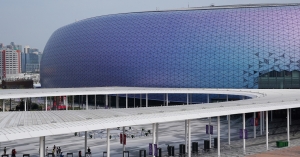
Government celebrates success of Kai Tak Sports Park Mark O'Neill
The Hong Kong government is celebrating the success of the Kai Tak Sports Park which opened in March last year – nearly 600,000 people have attended major sports events there. In a written reply in