

Irish novelist becomes literary star in China

Colm Toibin, one of Ireland’s best known novelists, have just completed a five-city tour of China, where he has become a literary star.
During his visit, Archipel Press, Toibin’s main publisher in China, released its 10th book in Mandarin, “Long Island”. This time he visited Shanghai, Nanjing, Guangzhou, Chengdu and Beijing, where he met readers and writers. It was his fifth visit to China, since 2009.
Dr Nicholas O’Brien, the Irish ambassador in Beijing, hosted a reception for him and Chinese author Xu Zhiyuan on the topic “No Single Way of Feeling at Home: From Brooklyn to Long Island”.
“It was a fascinating discussion,” O’Brien said. “It is always lovely to note that Irish literature is very popular in China.
In Shanghai, Toibin said: “There is a growing number of serious readers of fiction in China who will read books from any country as well as China. They are educated, curious. I was meeting with a new generation of publishers, translators, translators, literary journalists, people who really live and eat books as their food.”
Long Island came out in 2024. It is a sequel to “Brooklyn”, published in 2009. It tells the story of Ellis Lacy, a young Irish immigrant in the 1950s torn between her new home in New York and her old home in Enniscorthy, County Wexford, which is Toibin’s hometown. An international best seller, it was made into a film in 2015 starring Saoirse Ronan.
In Long Island, Ellis returns to Enniscorthy for the first time in 20 years to escape the pressure of having to accept an illegitimate child about to be born from her husband’s affair with a married woman.
The theme of exile chimes with millions of Chinese. Like the Irish, they escaped poverty at home to make a new life in Southeast Asia, the Americas and Europe. They have to balance their new life with their old. Should they marry a fellow Chinese or someone from their new country? Could their family at home accept such a union?
Since 1980 and the start of the reform era, millions of Chinese have made an internal exile, leaving their villages and hometowns for a new life in the rich cities of the East and Southeast. Many are not sure where they belong, in the new home or the old.
In terms of sales, Sally Rooney is the most popular Irish novelist in China. Her first novel in Chinese, “Conversations with Friends”, was published in 2019. Since then, Chinese had bought more than 150,000 copies of her novels. Others available in Chinese include “Normal People” and “Beautiful World, Where Are You?”
Zhang Yueran, who teaches literary studies at Renmin University in Beijing, said that, in face of official censorship about feminism, young women turned to novels to learn about it, including Rooney’s.
“There is definitely a robust feminist awakening among Chinese female readers,” she said. “Rooney’s characters pursue expanded freedom. There is something about her voice, especially when it shows the vulnerability of the characters. These moments are so beautiful that you want to stop there.
“Unlike Rooney, Chinese writers hardly ever let their characters talk about national politics,” she said.
In China, censorship of books is strict. For publishers, translating foreign works is a safer choice. They describe events happening outside China and therefore not so sensitive.
Peng Lun is the founder of Archipel Press, which has published both Toibin and Rooney. “There is no system ensuring that every book is approved by a censor. The publisher take responsibility for what they publish. It is more self-censorship than very strict censorship. Nothing has been censored in the translation of Rooney’s works”.
Literature is one of the greatest successes and exports of Ireland. With a population of 7.4 million, North and South, it has produced four Nobel laureates in literature – William Butler Yeats, George Bernard Shaw, Samuel Beckett and Seamus Heaney, as well as James Joyce.
With a population of 1.4 billion, China has produced two – Gao Xingjian and Mo Yan.
Irish author John Banville said that the country’s literary excellence was revenge for colonialism, in which English, a language of command and clarity, was imposed on “dreamy” Irish. “This produced a mode of evasion and out of that came wonders,” he said.
The Beijing Foreign Studies University has an Irish Studies Centre, the first multi-disciplinary and comprehensive research institute on Irish issues in China. There students study the Irish language, as Irish students at home learn Mandarin.
In July 2024, Professor Xie Jiangnan presented to the National Library of Ireland in Dublin a Chinese translation of James Joyce's Ulysses by Professor Liu Xiangyu. This monumental translation project took 20 years to complete and highlights the dedication and deep appreciation for Joyce's work in China.
-
How should leaders govern the people? Michael Chugani
A senior Mainland official once advised Donald Tsang Yam-kuen when he was the chief executive to think like the people do. It was good advice. Leaders who want to effectively serve the people need to
-

Hong Kong Tourism Board Unveils ‘Only in Hong Kong’
The Hong Kong Tourism Board (HKTB) launched ‘Only in Hong Kong’, a new global campaign that redefines how the city is experienced and differentiating Hong Kong as Asia’s World City. Moving beyond a
-
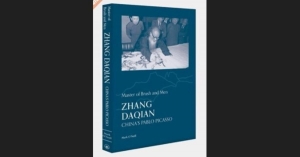
Zhang Daqian, China's Best Painter for 500 Years Mark O'Neill
At Sotheby’s art auction in Hong Kong in April this year, it put on sale three works by Zhang Daqian ( 張大千). One of them, Sunshine after Rain (雨後斜陽), sold for HK$15.36 million. It was evidence that,
-
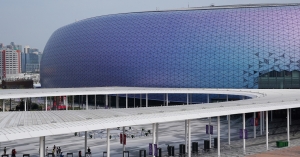
Government celebrates success of Kai Tak Sports Park Mark O'Neill
The Hong Kong government is celebrating the success of the Kai Tak Sports Park which opened in March last year – nearly 600,000 people have attended major sports events there. In a written reply in