

China’s London embassy – the decision no-one wants

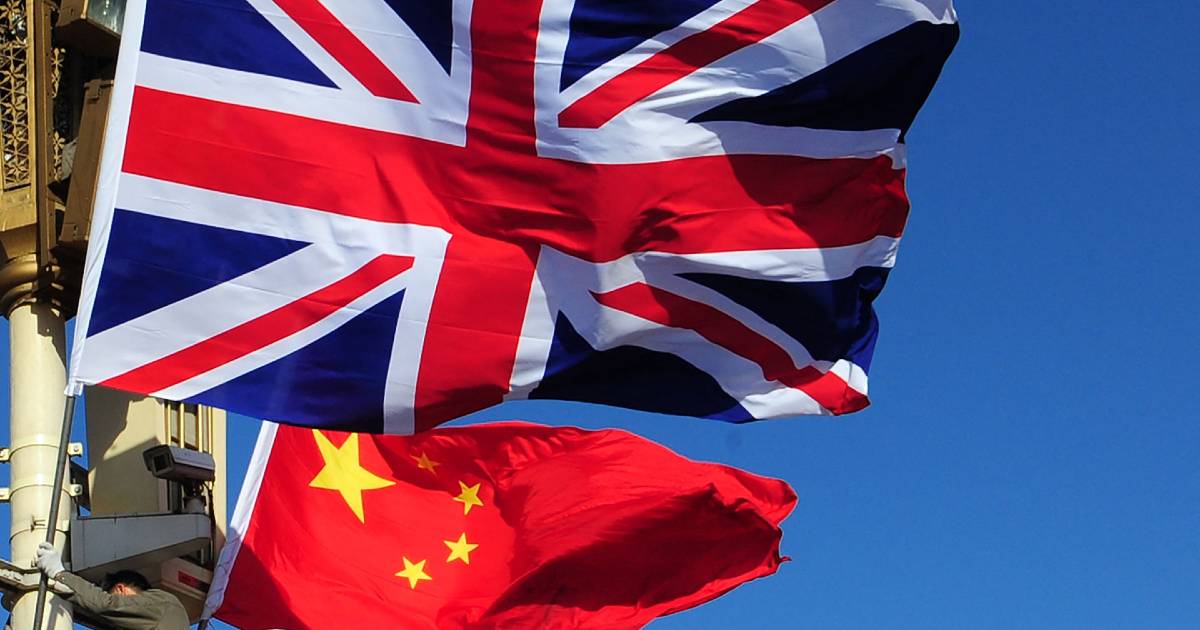
Three times the British government has put off a decision on whether to approve China’s controversial new embassy in the heart of London.
Whatever ministers decide will be criticised. If yes, then it is exposing Britain to a greater security threat. If no, it is snubbing the world’s second largest economy and creator of leading technologies.
It is no surprise that Prime Minister Sir Keir Starmer and his colleagues have postponed the decision, most recently until January 20 “because of delays in responses from the interior and foreign ministries.”
Adding pressure is Starmer’s plan to visit Beijing on January 29 and 31, the first by a British Prime Minister to China since 2018. Beijing has not announced the visit. Nor will it without approval for the embassy.
In 2018, the Chinese government purchased the two-century-old Royal Mint Court overlooking the Thames river. It would be the largest embassy in Europe. It has been waiting for approval for six years. It is close to fibre-optic cables carrying sensitive data to the City of London.
“We strongly urge the UK side to approve our planning application quickly to avoid further undermining mutual trust and co-operation between the two sides,” the Chinese embassy in London said last week. It would replace seven different sites the embassy currently uses.
Last week the Foreign Ministry in Beijing expressed its “serious concern and strong dissatisfaction” with the new delay. “All the so-called reasons (for it) are completely untenable.”
Last year President Xi Jinping called Starmer in person to urge him to give the approval.
Many people oppose the approval. They include local residents, the local council, Hong Kong pro-democracy campaigners and many members of the opposition Conservative Party who say that it would become “a spying hub”.
Speaking to reporters on October 16 in London, MI5 Director-General Ken McCallum said that Chinese state actors presented a U.K. national security threat every day. He said that, a week earlier, his agency had intervened to stop a threat from Beijing.
“Beijing-backed meddling has included cyberespionage, stealing technology secrets and efforts to interfere covertly in U.K. public life,” he said. The MI5 is Britain’s domestic intelligence agency.
Deputy National Security Adviser Matthew Collins has described China as “the biggest state-based threat to the U.K.’s economic security … Beijing’s espionage activities harm the interests and security of the U.K,” he said.
In November, MI5 said that Chinese intelligence agents were posing as recruiters to target people working in Parliament. It identified two LinkedIn profiles as being linked to Chinese intelligence – Amanda Qiu and Shirly Shen.
“China never interferes in other countries’ internal affairs,” said a spokesperson for the Chinese embassy.
On December 1, Starmer made a major speech to an audience in the City of London. It showed that approval was likely, ahead of his proposed visit to Beijing next month.
“While our allies have developed a more sophisticated approach (to China), the UK has become an outlier,” he said. “President Trump met President Xi in October and will visit China in April. Since early 2018, President Macron has visited China twice and will be there later this week. German leaders have visited four times, and Chancellor Merz will be there in the new year. During this period, no British prime minister has visited China.”
He said that it was the world’s second largest economy, accounting for over a quarter of global R & D and led in critical technologies. British policy could not continue to blow “hot and cold”.
“It is time for a serious approach, to reject the simplistic binary choice. The scale of opportunity in China is immense,” he said.
Starmer is not popular at home. A poll by City AM/Freshwater Strategy polling last week showed his approval rating drop to a score of -47, trailing well behind Tory leader Kemi Badenoch at -8 and Reform UK’s Nigel Farage at -12.
Since coming to power in July 2024, he has been most successful in foreign policy, including his handling of President Donald Trump and the Ukraine war. So he is keen to show a success in relations with China.
But approval of the embassy remains a choice between a rock and a hard place.
-
How should leaders govern the people? Michael Chugani
A senior Mainland official once advised Donald Tsang Yam-kuen when he was the chief executive to think like the people do. It was good advice. Leaders who want to effectively serve the people need to
-

Hong Kong Tourism Board Unveils ‘Only in Hong Kong’
The Hong Kong Tourism Board (HKTB) launched ‘Only in Hong Kong’, a new global campaign that redefines how the city is experienced and differentiating Hong Kong as Asia’s World City. Moving beyond a
-
Zhang Daqian, China's Best Painter for 500 Years Mark O'Neill
At Sotheby’s art auction in Hong Kong in April this year, it put on sale three works by Zhang Daqian ( 張大千). One of them, Sunshine after Rain (雨後斜陽), sold for HK$15.36 million. It was evidence that,
-
Government celebrates success of Kai Tak Sports Park Mark O'Neill
The Hong Kong government is celebrating the success of the Kai Tak Sports Park which opened in March last year – nearly 600,000 people have attended major sports events there. In a written reply in