

Fiscal Dominance and Negative Rates Risk
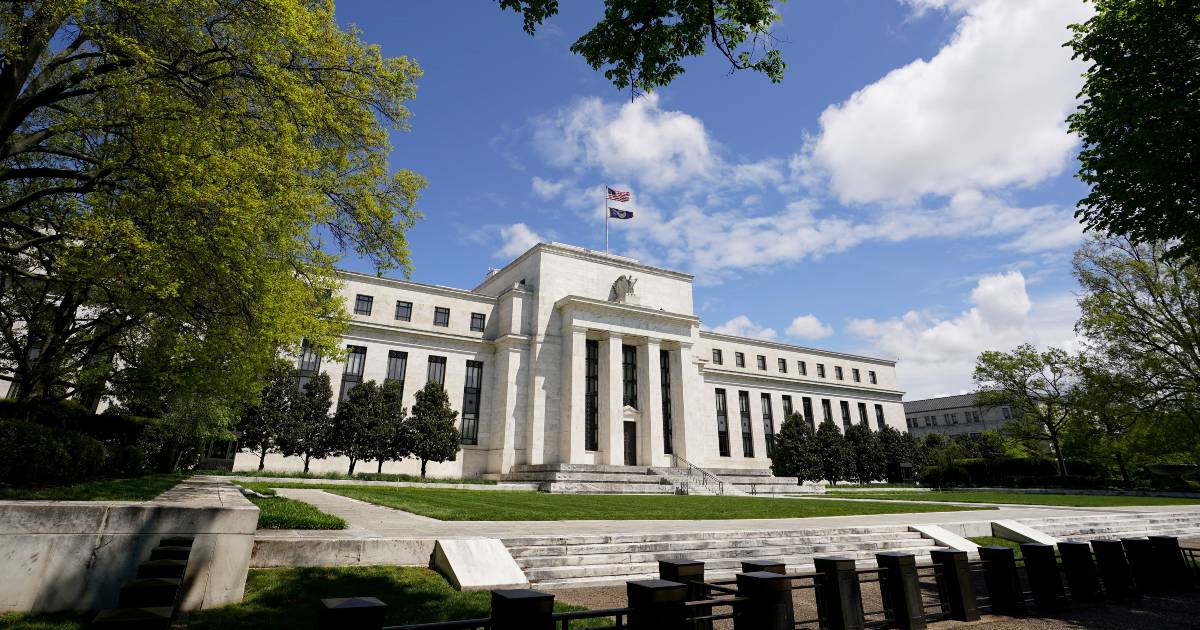
Imagine a scenario where central banks are under pressure to keep interest rates low — despite high inflation. Now, picture a situation in which inflation is higher than central bank interest rates, eroding the value of cash. In today’s volatile world, the risk of these economic dangers is ever-increasing.
The first scenario describes fiscal dominance, in which the size of a nation’s debt influences a central bank to keep interest rates low to minimise servicing costs, rather than focusing squarely on inflation. Fiscal dominance has been identified as a risk factor for major economies for some time.
In January, former US Federal Reserve chair Janet Yellen warned that the preconditions for fiscal dominance were “clearly strengthening” due to the country’s soaring debt. In the first five months of this fiscal year, the US budget deficit has again already exceeded USD 1 trillion, only slightly down from the same time period last year. Spending on the Iran war will only further add to the US national debt.
Meanwhile, we have already seen the second scenario — negative real interest rates — play out across G7 economies in the post-COVID era and more recently in Japan, with the Bank of Japan’s base rate currently sitting well below the rate of inflation. In this situation, investors’ cash savings lose value as inflation eats into purchasing power. The risk of this occurring across G7 economies is increasing as the war in Iran escalates inflationary pressures on already fragile economies, and with central banks having limited room for manoeuvre, owing to fiscal pressure.
Inflation indicators
Large fiscal burdens, when combined with geopolitical inflation shocks, such as the Iran war, increase the risk of a drift toward lower real interest rates, particularly if central banks are constrained in their ability to tighten policy.
The S&P Global US Flash PMI report, often seen as one of the key leading indicators to look at when gauging future inflation risks, stated on March 24 that “prices paid for inputs meanwhile spiked higher, due principally to the energy price jump caused by the war. Overall average input costs rose to the fastest degree for ten months”.
Inflation may well stay higher for longer, even if the current ceasefire in the Iran conflict should hold. Other factors building inflationary pressure globally, independent of oil and gas prices, include China’s deflation bottoming out, high sovereign debt levels in many countries, other conflicts, such as the war in Ukraine and trade tariff uncertainties.
Recognising risk and protecting portfolios
The threat of negative real interest rates is real. It is arguably one of the largest underestimated risks for global investors, as many currently consider cash the safest portfolio choice in a volatile environment. However, cash is very susceptible to inflation and the erosion of purchasing power in a negative real interest rate environment.
So, how can investors guard against the risk of rising inflation, and even negative real interest rates? For those who can tolerate a degree of volatility, allocating to inflation-proof assets might be a good idea. That can include assets such as property, equities, and anything not dependent on currency value.
In March, the S&P Global US Flash PMI observed that “higher costs were passed on to customers to generate the largest rise in selling prices in over three and a half years”, showing that companies are passing through higher input charges by charging higher prices, making them resilient to price increases, and in turn, making equities an attractive investment option.
Investing through times of turbulence and volatility also requires patience and a long-term outlook. Investors who can allocate funds for the longer term and have the appropriate level of volatility tolerance are still best suited to invest their capital. In fact, a study published last year on war dominating news headlines, covering over 160 years, found that there was a positive correlation with markets, not a negative one.
That does not mean everyone should necessarily invest all of their money. A careful risk and volatility tolerance should be conducted prior to investing, and we also strongly recommend not to use leverage when investing, not to speculate for the short term, as well as to diversify regionally as well as across investing styles and asset classes, in line with each investor’s risk appetite.
For now, investors are best advised to seek advice, recognise risks — not only market risks but also less obvious ones such as negative real interest rates — and consider carefully how to position their asset base to provide resilience and achieve long-term goals.
By Martin W. Hennecke, Head of Asia and Middle East Investment Advisory, St. James’s Place
-

How should leaders govern the people? Michael Chugani
A senior Mainland official once advised Donald Tsang Yam-kuen when he was the chief executive to think like the people do. It was good advice. Leaders who want to effectively serve the people need to
-

Hong Kong Tourism Board Unveils ‘Only in Hong Kong’
The Hong Kong Tourism Board (HKTB) launched ‘Only in Hong Kong’, a new global campaign that redefines how the city is experienced and differentiating Hong Kong as Asia’s World City. Moving beyond a
-
Zhang Daqian, China's Best Painter for 500 Years Mark O'Neill
At Sotheby’s art auction in Hong Kong in April this year, it put on sale three works by Zhang Daqian ( 張大千). One of them, Sunshine after Rain (雨後斜陽), sold for HK$15.36 million. It was evidence that,
-

Government celebrates success of Kai Tak Sports Park Mark O'Neill
The Hong Kong government is celebrating the success of the Kai Tak Sports Park which opened in March last year – nearly 600,000 people have attended major sports events there. In a written reply in