
U.S. wants the Castro family to leave Cuba
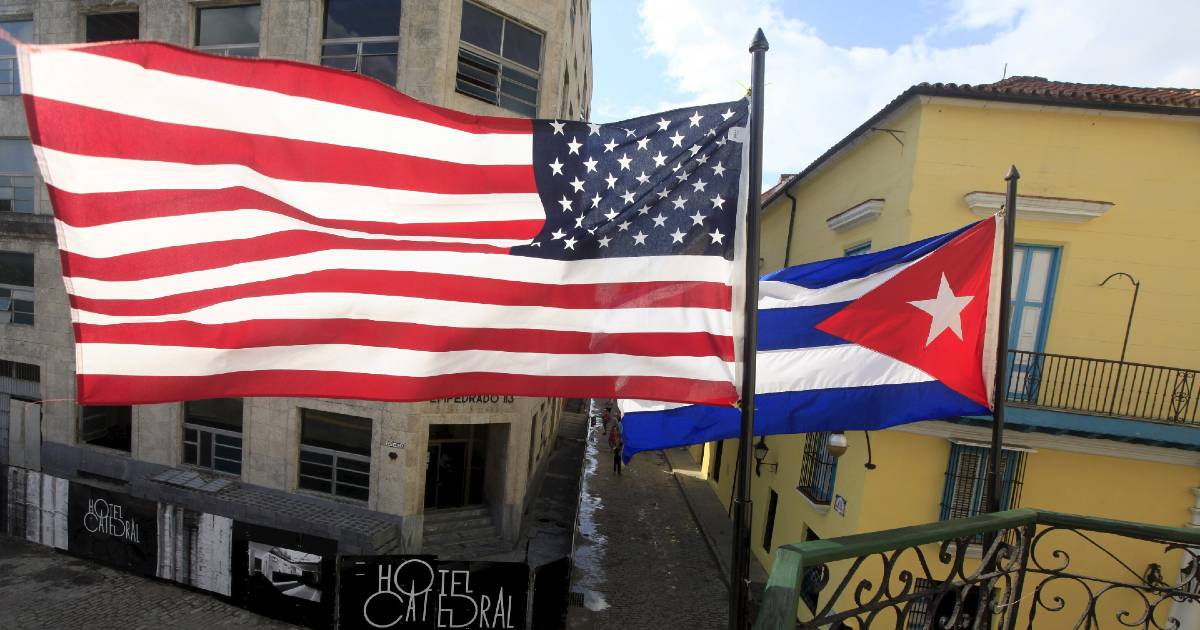
U.S. Secretary of State Marco Rubio has a mission – to overthrow the Communist regime in Cuba in power since 1959 and force the family of Fidel Castro who led the revolution to leave the island.
For Rubio, this mission is personal. His parents moved to Florida in 1956 and planned to return to Cuba until Castro’s revolution. He is the highest-ranking Cuban-American to hold public office in Washington.
He is the only Secretary of State to speak Spanish and have an intimate knowledge of the dossier. He shares with his fellow exiles a visceral hatred of the Communist regime.
They are similar to the White Russians and those who fled China after the Communists took power in 1949. They lost their land, property, assets, status and the life they enjoyed in the pre-revolutionary era.
Rubio has an opportunity no Secretary of State has had since 1959. He has the backing of a president willing to implement severe sanctions, including a virtual blockade of its oil supplies.
Cuba’s economy faces an unprecedented crisis, with daily power cuts affecting 60 per cent of the population and a contraction of 15 per cent in GDP over five years.
On April 20, a senior Cuban diplomat said his government had held talks in Havana with U.S. officials. The US online news outlet Axios said Trump officials held meetings in Havana on April 10 with Cuban officials, including Raul Guillermo Rodriguez Castro, grandson of former president Raul Castro. The US negotiators demanded several things, including the release of prominent political prisoners.
But Rubio had a deadline – November 3. On that day, U.S. voters will choose 35 of the 100 members of the Senate and all 435 members of the House of Representatives. In the Senate, the Republicans hold a majority of 53-47 and, in the House, 217-212.
All the opinion polls point to a severe defeat for the Republicans. They will lose the House and possibly the Senate. The Democrats will be less hostile to Cuba and are likely to demand an end to the blockade.
What do Rubio and the exiles want?
Marcell Felipe is a prominent tax and corporate lawyer in Florida and a leader of the Cuban-American community. “We ask for nothing better than to invest our fortunes in the reconstruction of our native country and that of our parents. For us, it is a sacred mission. We are willing to invest US$200 million in schools, ports, road, airports and hospitals.”
Like Rubio, he laid down conditions for this investment. “More than 1,000 political prisoners must be set free, civil rights must be restored and free elections organised.”
Joe Azel, another exile and an economist, said:
“without legal security, no Cuban-American would invest in a country known for its love of nationalisation.”
Another condition of the exiles is the departure of the Castro family. While Fidel died in November 2016, his family continue to hold key posts, including that of chief of the secret police. Fidel’s brother Raul, 92, president between 2008 and 2018, remains the most powerful person on the island. Their allies control the armed forces and the economy.
For Rubio, this makes the task more complex than in Venezuela. The removal of one person, President Nicholas Maduro, on January 3 this year, was sufficient to change the regime and make its members more pliable to American demands. In Cuba, it is a well-entrenched system of family and clan.
One of the leading dissidents is Dr Manuel Cuesta Morua. He said that, in Cuba, Rubio was regarded positively by a significant, if minority, part of the population. Morua met Democratic President Barack Obama during his historic visit to Cuba in 2016. It was the only such visit since 1959.
“Rubio is not as well regarded as Obama but he is better than President Miguel Diaz-Canel, who is associated with the repression of July 2012 and the socio-economic decline,” he said.
“Cuba is in its terminal phase. All its vital organs are under attack. Without Venezuelan petrol, it has no oxygen mask,” he said.
A study was published in 2024 called “The State of Social Rights in Cuba”. It was conducted by the Cuban Observatory of Human Rights, an independent organisation based in Madrid. It said that in 2024, 89 per cent of the Cuban population lived in conditions of “extreme poverty.” It said that 86 per cent of Cuban households existed “on the margins of survival” and that, of these, 61% did not even have enough to buy the essentials to survive.
A starving and angry population and moribund economy – these are conditions for a major change. But will the Castro family accept a gilded retirement in Mexico? That is the challenge of Rubio – and he has only six months to convince them.
-
How should leaders govern the people? Michael Chugani
A senior Mainland official once advised Donald Tsang Yam-kuen when he was the chief executive to think like the people do. It was good advice. Leaders who want to effectively serve the people need to
-

Hong Kong Tourism Board Unveils ‘Only in Hong Kong’
The Hong Kong Tourism Board (HKTB) launched ‘Only in Hong Kong’, a new global campaign that redefines how the city is experienced and differentiating Hong Kong as Asia’s World City. Moving beyond a
-
Zhang Daqian, China's Best Painter for 500 Years Mark O'Neill
At Sotheby’s art auction in Hong Kong in April this year, it put on sale three works by Zhang Daqian ( 張大千). One of them, Sunshine after Rain (雨後斜陽), sold for HK$15.36 million. It was evidence that,
-
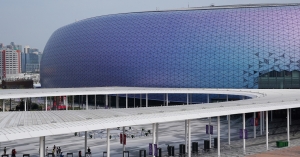
Government celebrates success of Kai Tak Sports Park Mark O'Neill
The Hong Kong government is celebrating the success of the Kai Tak Sports Park which opened in March last year – nearly 600,000 people have attended major sports events there. In a written reply in