

The Most Influential Foreigner in Qing China

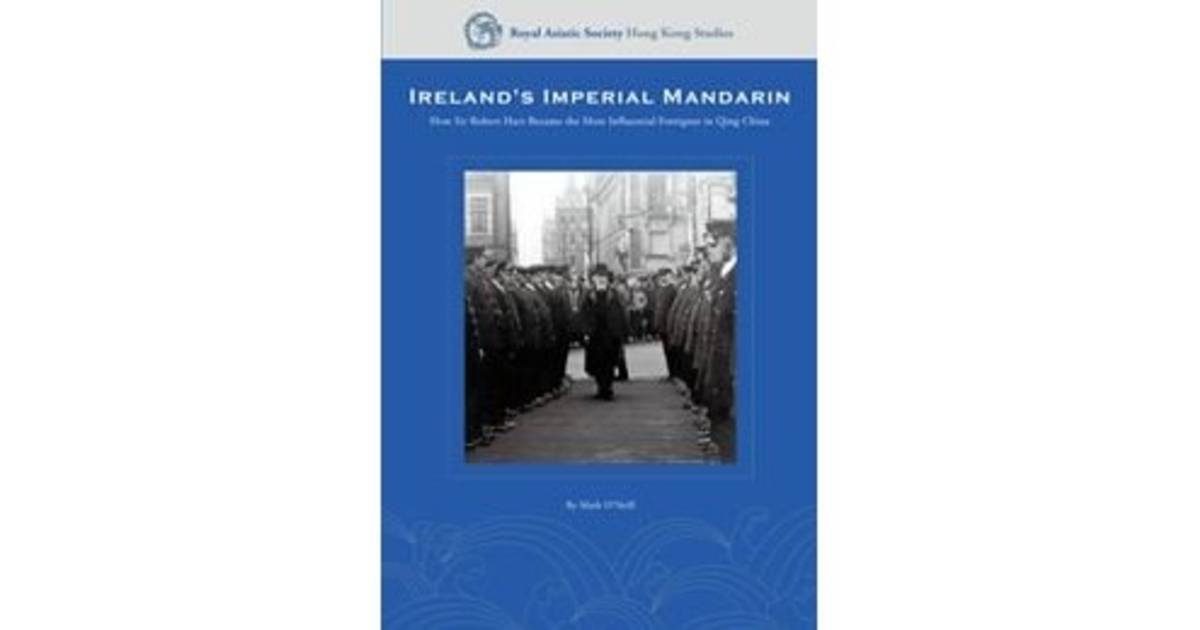
Sir Robert Hart was the most influential foreigner in China during the Qing dynasty from 1644 to 1911. He served as the Inspector-General of the Imperial Maritime Customs Service (IMCS) from 1863 until his death in 1911.
He provided the empire with more than 20 per cent of its annual revenue, set up the Chinese Post Office and founded a system of lighthouses along the coast. He bought British warships that were the foundation of the Chinese navy and negotiated a peace treaty to end the Sino-French war of 1894-95.
No foreigner has ever had or will ever have the life and position he had in China, running a major government department.
His extraordinary life is described in “Ireland’s Imperial Mandarin” by Mark O’Neill. Joint Publishing has just issued a second edition. If you would like a copy, please contact [email protected] who will forward your request to the author.
Hart was born on February 20, 1835 in Portadown, a small town in Northern Ireland. He was the eldest of 12 children of a prosperous middle-class family that was devoutly Methodist.
He attended Wesley College in Dublin and Queens University in Belfast. An outstanding student, he won a scholarship and entered the university aged 15. He learnt the habits of study and self-discipline that would serve him well in learning Mandarin and running the Customs Service in China.
In 1854, he joined the British Foreign Service. It sent him to work as a “supernumerary interpreter” to the consulate in Ningbo, one of the Treaty Ports Beijing had been forced to open 12 years before. He had two years to master Mandarin, with light duties at the consulate.
In 1857, he was introduced to Miss Ayaou, a beautiful young lady and the daughter of a fisherman. She was the love of his life and gave him two sons and one daughter. Their relationship lasted six years.
In November 1863, Prince Gong, one of the most senior officials of the Qing government, appointed Hart director-general of the IMCS in Beijing. Its task was to collect import and export duties and pay them to Beijing. He was just 28.
One price he had to pay for this prestigious post was separation from Miss Ayaou. As a high official in Beijing, he could not marry the daughter of a fisherman. He gave her 3,000 dollars, a large sum at the time, and never saw her again.
He took their three children to London and entrusted them to a foster family, to whom he gave 6,000 pounds for their living and education costs. Nor did he see or have direct contact with them ever again.
Back in Beijing, he created an IMCS like the United Nations. While most of the staff were Chinese, he recruited qualified Europeans and Americans; they spent two years in Beijing studying Mandarin before being sent to one of the 14 ports where the service had an office. Its two official languages were Mandarin and English.
“It is the duty of each IMCS member to conduct himself toward Chinese, people as well as official, in such a way as to avoid all cause of offence and ill-feeling,” he wrote in a circular in 1864.
He established detailed regulations to prevent corruption, which was widespread in government departments. They worked. Customs revenue rose from 8.3 million silver taels in 1865 to 14.5 million in 1885, accounting for nearly 20 per cent of national revenue. Its record, in 1899, was 26.66 million taels, 27 per cent of national revenue.
Such was the trust and confidence he earned from his Chinese superiors that they sought his advice on many issues, including how to deal with the greedy and arrogant foreign powers.
They asked him to build a modern navy. He ordered seven vessels from W.G. Armstrong in Newcastle, England, one of the world’s leading makers of warships. He helped to set up China’s first shipyard and naval school in Fuzhou and establish its diplomatic service.
He arranged a loan of 14.7 million taels from British banks for a military campaign to suppress Muslim rebellions in west China. IMCS revenue was collateral.
In August 1866, he married an Irish lady from his hometown. She gave him three children but detested life in Beijing. In 1882, she and the children went to live in a large house in central London he had bought for them. He lived alone in Beijing for the next 26 years.
In 1885, on behalf of the Qing government, Hart negotiated a peace treaty to end the Sino-French war. He sent his secretary in London to Paris to conduct the negotiations.
In 1900, the Boxers burnt down his home and office and besieged Hart and 1,200 other foreigners in the Beijing Legation Quarter. The siege lasted 55 days.
In 1901, a London company produced his “Theses from the Land of Sinim, Essays on the Chinese Question”. It was his testimony to the people who had given him a lifetime opportunity he could never have imagined. It created a sensation in the West and the book sold out.
“Chinese are well-behaved, law-abiding, intelligent, economic and industrious. They can learn anything and do anything. They are punctiliously polite, they worship talent.”
He also correctly forecast the expulsion of foreigners that would take place in 1949 and China’s rise as an industrial power. “Wait a score of years and you’ll have China laying down in Europe all sorts of things and selling for a shilling with profit what it costs Europe half-a-crown to produce.”
We can only marvel at such wisdom and foresight.
-
How should leaders govern the people? Michael Chugani
A senior Mainland official once advised Donald Tsang Yam-kuen when he was the chief executive to think like the people do. It was good advice. Leaders who want to effectively serve the people need to
-

Hong Kong Tourism Board Unveils ‘Only in Hong Kong’
The Hong Kong Tourism Board (HKTB) launched ‘Only in Hong Kong’, a new global campaign that redefines how the city is experienced and differentiating Hong Kong as Asia’s World City. Moving beyond a
-
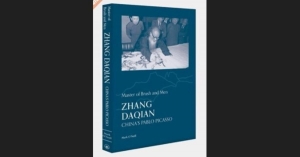
Zhang Daqian, China's Best Painter for 500 Years Mark O'Neill
At Sotheby’s art auction in Hong Kong in April this year, it put on sale three works by Zhang Daqian ( 張大千). One of them, Sunshine after Rain (雨後斜陽), sold for HK$15.36 million. It was evidence that,
-
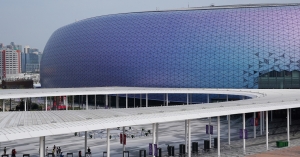
Government celebrates success of Kai Tak Sports Park Mark O'Neill
The Hong Kong government is celebrating the success of the Kai Tak Sports Park which opened in March last year – nearly 600,000 people have attended major sports events there. In a written reply in