

Six months in basement, no bath – front line in Ukraine

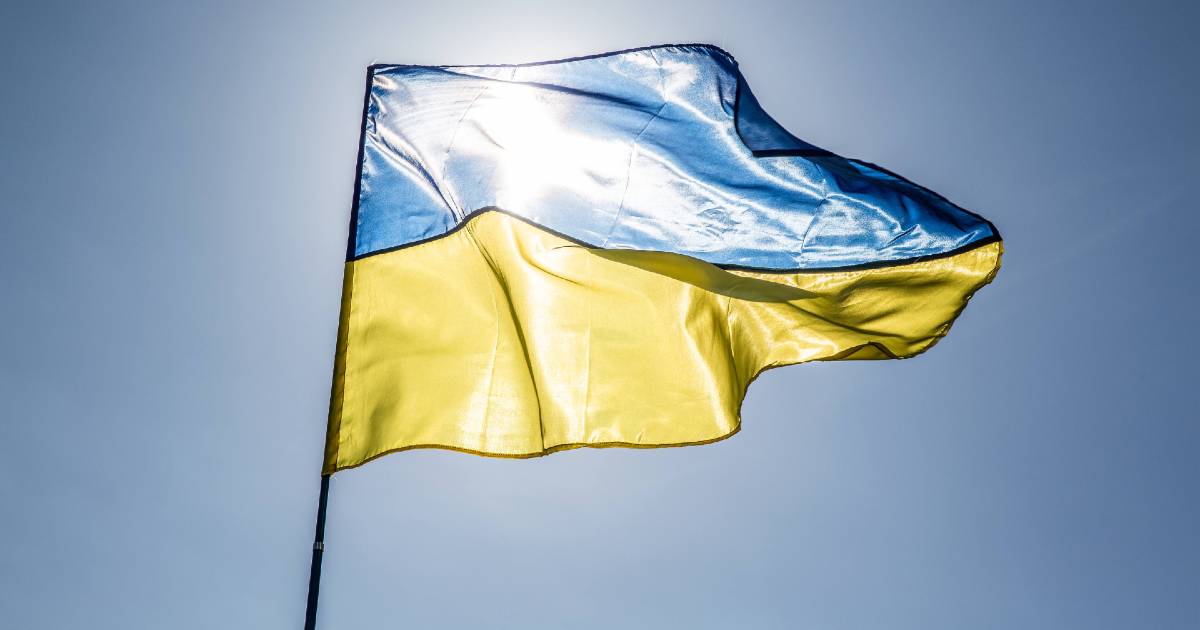
For six months, Ukrainian soldier Vyacheslav lived in a basement, was attacked by chemical weapons, did not take bath, ate no fruit and vegetables and was supplied only by robots and drones.
On a rare foray outside, he and his partner found a Russian soldier hidden in a house. The Russian killed his partner and he killed the Russian.
In his 50s, thin, bearded and with his face wrinkled, Vyacheslav gave a rare first-hand account of life on the front line in the Russo-Ukrainian war. He was speaking to the French magazine L’Express in Donbass, 15 kilometres from the front line.
Mobilised in August 2025, he was given two months training and last October was taken in an armoured vehicle with another recruit Serhiy to Kostyantynivka. The two walked two kilometres to their position, the basement of a building. They were carrying a sack with food for several days.
“This was a luxury compared to those who have to dig a hole to survive,” he said. For the next month, a robot supplied them with coffee, cigarettes, sausages, bread, candles, water, batteries, ammunition and gas canisters to stay warm. When that became too dangerous, it was drones that made the delivery. To recover the items took care, to avoid the eyes of the ever-present drones.
The trenches of the early months of the year have been replaced by a “kill-zone” 20 kilometres wide separating the two sides. Drones from both sides see everything. Groups of two-three men stay in front line positions for months.
“Our job was to watch, stay invisible and pass to our commanders the movements of the Russians. We did two-hour shifts in rotation. Each month was worse. The Russians destroy everything with bombs, missiles and artillery and advance through the ruins. Above all, you had to avoid being seen,” he said.
“Twice we were attacked by chemical weapons (illegal under the rules of war). The Russians find your position with thermal cameras, throw a gas grenade with a drone into your hole or basement. You must rest inside with your mask and wait for the gas to dissipate.”
The Russians try to infiltrate by sending small groups to hide in defensible positions and wait for reinforcements. “You could stay in a house and the Russians could be sleeping in the room next to you.”
He said that he was never short of food. “But I rationed water, drinking less, to avoid going outside. Water was gold. You forget about bathing and keep enough to drink and clean your teeth.
“There you know nothing – a delivery today but perhaps nothing tomorrow. Sometimes you sleep two hours a day and sometimes more, even if shells are falling next to you. The body gets used to everything.”
Last December 14 he was able to call his partner at home by video. “The next day we took advantage of the fog and smoke to do reconnaissance. Inspecting a house, we opened the door and found an armed Russian. Serhiy was in front of me and the Russian killed him. I shot him at once. It was him or me.
“It was by chance that I went with Serhiy. If he had gone alone, he would have been killed, the Russian would have continued to kill and revealed our position. At the cost of his life, Serhiy saved many others.”
In theory, the army rotates its soldiers from these frontline positions every two months. But some stay for more than 200 days – the exit route is too dangerous, monitored by drones and with mines they leave behind.
Finally, in March, Vyacheslav and his new comrade Ivan received the order to rotate. They walked three and a half kilometres, then stayed 22 days in a basement, waiting for fog, rain and strong wind. Then 12 kilometres, waited a week and the final 15 miles to Kramatorsk.
“The first thing I did was to wash and eat to quash my hunger. I greatly missed fruit and vegetables. I dreamt of that for six months,” he said. He suffers from headaches and the after-effects of shocks from explosions.
According to Ukrainian military doctors, after 40 days some soldiers fall into a profound apathy and lose the will to live.
After ten days of rest, Vyacheslav returned to the Donbass as driver for his brigade. “I do not allow myself to think of the future of the war. All I know is that I will remain in my post until the end.”
Is this the life we humans are reduced to?
-

How should leaders govern the people? Michael Chugani
A senior Mainland official once advised Donald Tsang Yam-kuen when he was the chief executive to think like the people do. It was good advice. Leaders who want to effectively serve the people need to
-

Hong Kong Tourism Board Unveils ‘Only in Hong Kong’
The Hong Kong Tourism Board (HKTB) launched ‘Only in Hong Kong’, a new global campaign that redefines how the city is experienced and differentiating Hong Kong as Asia’s World City. Moving beyond a
-
Zhang Daqian, China's Best Painter for 500 Years Mark O'Neill
At Sotheby’s art auction in Hong Kong in April this year, it put on sale three works by Zhang Daqian ( 張大千). One of them, Sunshine after Rain (雨後斜陽), sold for HK$15.36 million. It was evidence that,
-
Government celebrates success of Kai Tak Sports Park Mark O'Neill
The Hong Kong government is celebrating the success of the Kai Tak Sports Park which opened in March last year – nearly 600,000 people have attended major sports events there. In a written reply in