

Devout Christian became world’s top persecutor
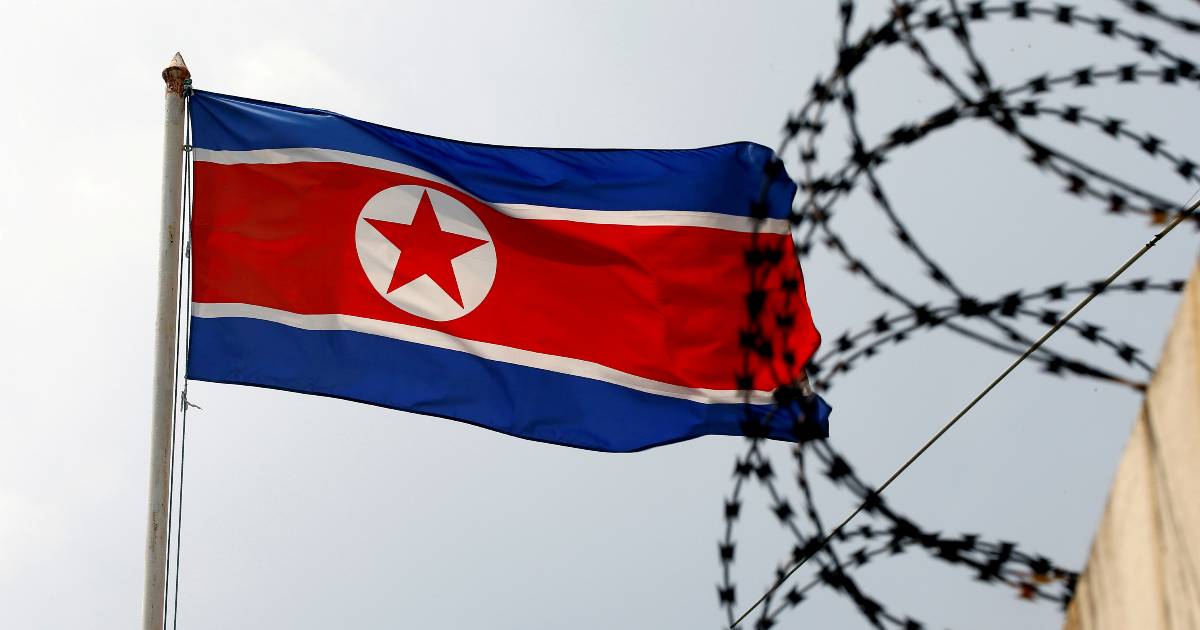
Kim Il-sung was the son and grandson of Christian converts. Growing up, he went to church every Sunday, taught Sunday school, played organ in church and performed in holy plays.
He was the son of the “Jerusalem of the East”, the name given to Pyongyang during the first half of the 20th century. In 1945, one sixth of its population was Christian – the highest proportion per capita in Asia – with dozens of churches and a major Presbyterian seminary founded in 1901.
How did such a devout believer become the most violent persecutor of Christianity in the world?
This is explained by Jonathan Cheng in his book “Korean Messiah: Kim Il Sung and the Christian Roots of North Korea’s Personality Cult”. It is 769 pages long and took 12 years to write.
He worked as the Seoul correspondent of the Wall Street Journal from 2013 to 2019. He gave a talk on his book at the Asia Society on Tuesday evening.
“Kim modelled his personality cult on Christianity,” Cheng said. “North Korea is less of a nation state than a religious society. Kim believed that devotion and faith were a good way to govern the country.
“Every morning after they get up, North Koreas wipe the dust off the portraits of the Kims in their living room, bow before them and read their words in the newspaper.”
Kim used the practices and doctrine of Christianity he had learnt as a young man to create a devotion toward himself, his son and grandson.
The Catholic religion was brought to Korea in 1784 by an intellectual named Yi Seung-han who had been converted in Beijing. Protestantism arrived in 1864 through a convert named Suh Sang-ryun, who smuggled a translation of Luke’s Gospel from missionaries in Manchuria.
In 1884, Horace Allen, an American medical missionary, arrived in Korea and healed the Queen’s brother. As a result, the Joseon dynasty welcomed missionaries. Allen established a medical hospital and a school. Missionaries were given permission to establish educational institutions all over the nation; Christians started 293 schools and 40 universities.
In 1901, the Pyongyang Theological Seminary was founded and graduated its first ministers in 1907. It was supported by Presbyterian missionary boards in the U.S., Australia and Canada.
The heart of Christianity in Korea in the early 20th century, it earned Pyongyang the name “Jerusalem of the East”.
Kim’s grandparents and parents were early converts. His mother was the daughter of a church elder. So devout, she became a “Bible woman”, going from village to village and teaching people how to read the Bible.
Another factor that helped to spread the religion was the church’s identification with the independence movement against Japanese colonialism. On March 1, 1919, 33 people signed the Independence Movement Declaration, saying that Korea was an independent state and would no longer tolerate Japanese rule. Of the signatories, 16 were Christian.
By 1945, according to historical estimates, there were 257,000 Christians in the northern half of Korea, of whom 200,000 were Protestant and 57,000 Catholic.
During World War Two, Kim served as an anti-Japanese guerilla leader and became a captain in the Soviet Red Army. In August 1945, this army invaded and occupied the northern half of Korea.
On September 19, 1945, Kim returned to Korea after an absence of more than 20 years. He was just 33. His written and spoken Korean was poor; he had received his eight formal years of education in Chinese.
The Soviets who occupied the country had an intense debate over whom to install as their puppet ruler. After approval by KGB chief Laventiy Beria, Josef Stalin endorsed Kim. In December, they installed him as head of the Communist Party of North Korea.
Among Koreans who had fought Japan, Kim was not a unanimous choice. Many considered him too young and unqualified, not least because he had been absent from the country for so long. Others had fought Japan within the country at greater personal risk. What did Kim know about economics and rebuilding the country?
This seems to be the reason why he turned against the faith of his parents and grandparents. A creature of Stalin, he had seen how he ruled the Soviet Union.
Taking over a country devastated by war and with many people against him, he decided the only way to stay in power was to copy his master in Moscow -- wipe out all opposition and create a personality cult.
This cult began in 1949, with statues of himself as the “Great Leader” appearing everywhere. He took it further than Stalin or Chairman Mao, presenting himself, his son and grandson as Christ-like figures.
He carried out sweeping purges of his opponents, within the party and outside. He confiscated the money and property of the churches and forced members to give up their faith. Those who did not faced labour camps, torture and execution.
By the 1970s, his government said that Christianity had been wiped out in North Korea. In 2012, the Open Doors World Watch List said that, in 2011 for the tenth year running, North Korea was the country where Christians faced the most severe persecution.
In later years, according to the official account of his life, Kim saw his mother in his dream. “I believe that he felt some guilt, some shame over what he had done,” said Cheng. He built two churches for her in Pyongyang, in 1988 and 1992.
“Then he invited Billy Graham and pastors from South Korea to visit him. He could recite the Bible until he died,” he said. Kim died on July 8, 1994, aged 82.
In his next life, what did he say to his Maker and his mother?
-
How should leaders govern the people? Michael Chugani
A senior Mainland official once advised Donald Tsang Yam-kuen when he was the chief executive to think like the people do. It was good advice. Leaders who want to effectively serve the people need to
-
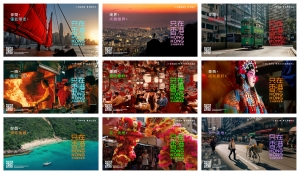
Hong Kong Tourism Board Unveils ‘Only in Hong Kong’
The Hong Kong Tourism Board (HKTB) launched ‘Only in Hong Kong’, a new global campaign that redefines how the city is experienced and differentiating Hong Kong as Asia’s World City. Moving beyond a
-
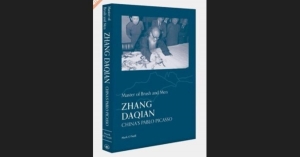
Zhang Daqian, China's Best Painter for 500 Years Mark O'Neill
At Sotheby’s art auction in Hong Kong in April this year, it put on sale three works by Zhang Daqian ( 張大千). One of them, Sunshine after Rain (雨後斜陽), sold for HK$15.36 million. It was evidence that,
-
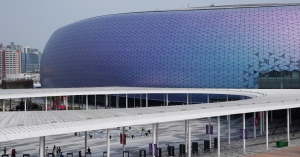
Government celebrates success of Kai Tak Sports Park Mark O'Neill
The Hong Kong government is celebrating the success of the Kai Tak Sports Park which opened in March last year – nearly 600,000 people have attended major sports events there. In a written reply in