

Chinese crave U.S. investments

The interest rate on a one-year yuan deposit in the Industrial and Commercial Bank is 0.95 per cent. For a one-year U.S. dollar deposit in Citibank, it is four per cent.
The Shanghai Composite Share Index has risen 2.4 per cent since September 2025. The Standard & Poor Index has risen 34 per cent over the same period.
Is it any wonder that Chinese investors want to hold U.S. assets and not mainland ones?
But Beijing is facing a fall in national tax revenue. In 2025, China's fiscal revenue fell 1.7 per cent from a year earlier, the first contraction since 2020 due to a protracted property slump and weak domestic demand.
It wants its people to invest not abroad but in domestic assets and domestic industries, especially those it considers strategic.
So it has adopted a two-pronged strategy. In early September, it made a small increase of US$6.8 billion, to a record US$183 billion, in the total that can be invested through the Qualified Domestic Institutional Investor (QDII) scheme.
Introduced in April 2006, it allows approved banks, funds, trust companies, securities firms and insurance companies to invest abroad in equities, fixed income and derivatives in specified overseas markets, on behalf of themselves and retail investors. The U.S. is the top destination for China’s QDII funds, accounting for nearly half of the business.
But it is a drop in the bucket of demand.
The amount of money held by Chinese offshore is staggering. According to data from the Institute of International Finance (IIF), resident capital outflows from the mainland reached a record US$809 billion in 2025.
Much of that went to Hong Kong. Cross-border wealth booked in the city last year was US$2.95 trillion, up 10.7 per cent on 2024, the IIF said. From there, the money is invested around the world.
Boston Consulting estimates that wealthy mainlanders now hold up to US$1.2 trillion in offshore low-tax hubs, including Hong Kong and Singapore.
This money has accumulated over the last 30 years of China’s economic miracle. The entrepreneurs sought both a better return on their money overseas and also an insurance policy against a return to the Communist Party policies against the rich during its first 30 years in power.
To claim back some of this money, on July 24, the government launched a global hunt for billions of dollars in unpaid taxes going back as far as 2000. It demanded 20 per cent tax on offshore gains from purchases of real estate, equities, precious metals and cryptocurrencies, among other assets.
One favoured instrument for the rich is offshore trusts. In a report, KMPG said more than half of China’s super-rich – with net worth or investible assets of more than US$30 million – had set up such vehicles. They moved shares and capital into entities registered in low-tax jurisdictions like the Cayman and British Virgin Islands.
Among those who set up such trusts are the owners of Pinduoduo, Xiaomi, Haidilao and Longfor, all highly successful private companies.
Under the new rules, the income generated by these trusts will be subject to a 20 per cent tax at multiple stages.
The rules have set off panic among the wealthy. The trusts have served multiple purposes – managing global wealth, protecting assets from taxes and providing for future generations after the company founder’s death.
Now these overseas capital gains and investments are vulnerable to taxes, with a time period that could stretch back more than 20 years.
Xiao Geng, associate dean of the School of Public Policy at the Chinese University of Hong Kong, Shenzhen said that these capital flows had done little to help the “real economy” at home.
Bringing these offshore assets into the regulatory fold would encourage long-term investment at home, he said.
Another part of the crackdown is punishment of three online Hong Kong stockbrokers – Futu, Tiger and Longbridge – for soliciting business in China without an onshore licence. They said that they were transferring funds into accounts for mainland Chinese investors.
One HK bank is telling mainland clients who want to open investment accounts to sign a declaration saying that their funds come from overseas, not China.
The China Securities Regulatory Commission said that the crackdown targeted the illegal operations of brokers in the mainland and would not affect their overseas business.
“The accounts of Chinese investors will not be forcibly closed and there will not be mandatory liquidation of assets due to the rectification campaign,” it said.
-
How should leaders govern the people? Michael Chugani
A senior Mainland official once advised Donald Tsang Yam-kuen when he was the chief executive to think like the people do. It was good advice. Leaders who want to effectively serve the people need to
-
Hong Kong Tourism Board Unveils ‘Only in Hong Kong’
The Hong Kong Tourism Board (HKTB) launched ‘Only in Hong Kong’, a new global campaign that redefines how the city is experienced and differentiating Hong Kong as Asia’s World City. Moving beyond a
-
Zhang Daqian, China's Best Painter for 500 Years Mark O'Neill
At Sotheby’s art auction in Hong Kong in April this year, it put on sale three works by Zhang Daqian ( 張大千). One of them, Sunshine after Rain (雨後斜陽), sold for HK$15.36 million. It was evidence that,
-
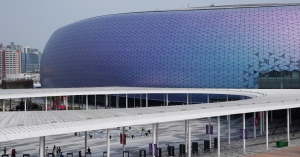
Government celebrates success of Kai Tak Sports Park Mark O'Neill
The Hong Kong government is celebrating the success of the Kai Tak Sports Park which opened in March last year – nearly 600,000 people have attended major sports events there. In a written reply in