
“Live in Luxury, Reign until Death” – Putin’s goal

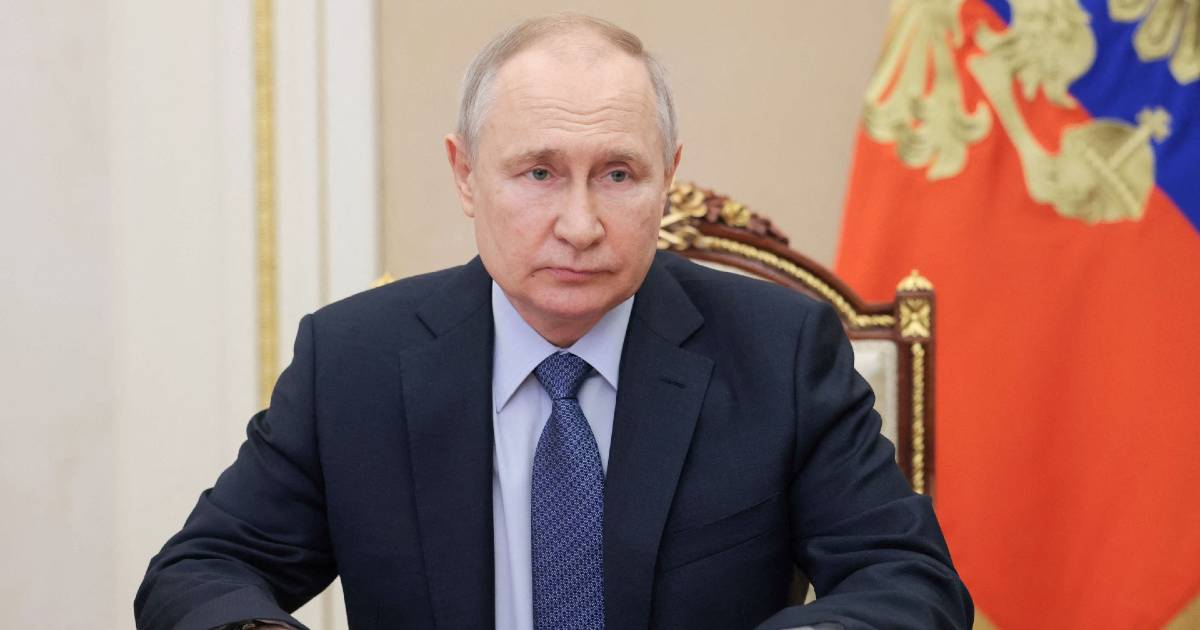
A new book by two Russian investigative journalists describes Vladimir Putin as a man obsessed by money and ready to do anything to keep power. They sum up his ideology – “Live in Luxury, Reign until Death”.
“The Tsar in Person – How Vladimir Putin Deceived Us All”, nearly 800 pages long, is the result of 20 years of research by Roman Badanine and Mikhail Rubin, which has been published in Russian and French. It won the Grand Prix Strasbourg, a French literary prize this year.
Both men fled Russia in 2021 after agents of the FSB, the Russian intelligence service, raided their homes in Moscow. They left Rubin’s passport on his table – a tacit instruction to leave the country. They live now in the United States.
Both were formerly accredited to the Kremlin. They conducted hundreds of interviews for the book. It presents Putin as a modern-day tsar, without ideology or convictions, a dictator capable of “limitless cruelty” who sees himself as above morality and laws.
“For anyone who has followed his acts and movements day after day, it is clear that Putin has absolutely no ideology. The war in Ukraine has made this clear: it is not an extension of his ideas, merely a means of staying in power,” they write.
In the 1990s, Putin was not anti-Western. He visited France with his family and bought a house for one of his favourite mistresses near Nice, in southern France. But, in the late 2000s, he found it useful to create an external enemy out of the West. He saw that anti-Americanism was popular among the public.
The book describes him as the richest man in Russia, owning land, companies and palaces like an Italianate complex near Gelendzhik on the Black Sea. Construction, which began in 2005, cost an estimated US$1 billion, in a domain of 74 hectares. But Putin hides his ownership through offshore companies and the names of friends and associates.
“In the 2000s, during his first two mandates, there was a second wave of privatisation, enabling those close to him to profit and seize the assets of those who benefitted from the first privatisation of the 1990s. In this Mafia system, their only obligation is not to display wealth or corruption too ostentatiously. Putin likes discretion.
“He is pathologically mean and gives nothing to his friends, wives and children. He controls the money, leaving his rich friends to pay the expenses of his mistresses,” they said.
The official media presents him as a man of simple tastes, who goes to church at Easter, swims in icy water, is not seen in the company of women and camps in tents in the countryside. This image is false, the book says.
Those in government say that, following his divorce in 2013, he has had many girlfriends. But they are never seen in public, to preserve his images as a virtuous man.
“He is a hypochondriac, constantly surrounded by a medical team with an average of five doctors,” the two wrote. He has never designated a successor. “The Tsar knows that he cannot leave the Kremlin.”
The most consistent policy of Putin since he took power in 2000 has been war – two wars with Chechnya, Georgia and, since 2014, Ukraine.
According to Ukrainian figures, 1.57 million Russians have been killed, wounded, gone missing or captured in the Ukrainian war. That is more than any Russian conflict since the Second World War. How does Putin live with this?
Mikhail Epstein, a Russian scholar living in exile in the U.S., tries to explain this in “The Politics of Apocalypse -- Anti-World Russia”.
“Russia is very influenced by the Mongol invasion of the 13th and 14th century. The raison d’etre of a nomad state is conquest of new land.” He quoted Edward Limonov, an important ideologue of the Russian world: “we have need of land. Perhaps we will conquer the entire world. People will die young, but it will be joyful.”
Epstein commented: “that is how we must interpret this shocking speech of Putin in 2022 to the mothers of soldiers fighting in Ukraine – ‘each year tens of thousands of Russians die in road accidents or alcoholism without knowing why they lived. He who dies fighting does not live for nothing. He reached his objective.”
-
How should leaders govern the people? Michael Chugani
A senior Mainland official once advised Donald Tsang Yam-kuen when he was the chief executive to think like the people do. It was good advice. Leaders who want to effectively serve the people need to
-

Hong Kong Tourism Board Unveils ‘Only in Hong Kong’
The Hong Kong Tourism Board (HKTB) launched ‘Only in Hong Kong’, a new global campaign that redefines how the city is experienced and differentiating Hong Kong as Asia’s World City. Moving beyond a
-
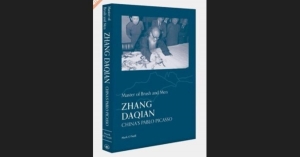
Zhang Daqian, China's Best Painter for 500 Years Mark O'Neill
At Sotheby’s art auction in Hong Kong in April this year, it put on sale three works by Zhang Daqian ( 張大千). One of them, Sunshine after Rain (雨後斜陽), sold for HK$15.36 million. It was evidence that,
-
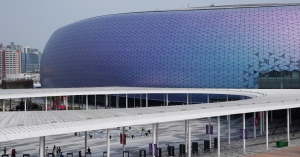
Government celebrates success of Kai Tak Sports Park Mark O'Neill
The Hong Kong government is celebrating the success of the Kai Tak Sports Park which opened in March last year – nearly 600,000 people have attended major sports events there. In a written reply in