

Why aren’t mainland travellers coming?


Expect the unexpected.
When China opened door for travel earlier this week, many might have expected the wealthy mainland travellers to flood to other countries for shopping.
It has not happened yet. In fact, there are some issues to be solved.
Spending a week in the busiest districts in Tokyo, I heard more Cantonese than mandarin.
That was also evidenced in Japanese newspaper Sankei Shimbun which reported the Japan tourism industry is very excited about the incoming mainland tourists but so far it’s below expectations.
There are 10 flights weekly between Japan and China by Japan Airlines but the booking so far has been pretty much the same as it was last year. Travel agency JTB also received many enquiries but not one single booking. A Kyoto hotel owner said there have not been any mainlanders staying this week, the newspaper reported.
That might be good news for Hong Kong travellers to Japan in the Chinese New Year, but its is not good news at all to the Japanese economy awaiting for a much-needed boost from mainland tourists.
Things were complicated by Beijing imposing retaliatory measures on Japan and South Korea, by suspending the issuance of short-term visas in response to entry curbs on mainlanders after its reopening.
Starting this week, Japanese and Korean government require mainland travellers to submit their negative test results 72 hours before their travel. They would be subject to a seven-day quarantine if they are found positive in the ground PCR tests.
As such, the travelling between China and Korea as well as Japan are expected to be limited as mainlanders pick other more travel-friendly countries such as Thailand and Singapore for their destinations.
Here in Hong Kong, the effect of mainland travellers on boosting the economy is still waiting to be seen.
The mainland group tour is expected to come this weekend with the reopening of high-speed rail, a week before the Chinese New Year. But industry experts expect a meaningful amount of tourists would only come after mid-February.
Out of the 45,000 people crossing the seven border checkpoints, some 70 per cent of people were leaving (northbound), which means more than double the people coming (southbound).
Unlike the sharp SARS rebound we witnessed 20 years ago, this time it may take longer to return to normal.
-- Contact us at [email protected]
-
How should leaders govern the people? Michael Chugani
A senior Mainland official once advised Donald Tsang Yam-kuen when he was the chief executive to think like the people do. It was good advice. Leaders who want to effectively serve the people need to
-
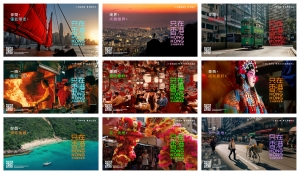
Hong Kong Tourism Board Unveils ‘Only in Hong Kong’
The Hong Kong Tourism Board (HKTB) launched ‘Only in Hong Kong’, a new global campaign that redefines how the city is experienced and differentiating Hong Kong as Asia’s World City. Moving beyond a
-

Zhang Daqian, China's Best Painter for 500 Years Mark O'Neill
At Sotheby’s art auction in Hong Kong in April this year, it put on sale three works by Zhang Daqian ( 張大千). One of them, Sunshine after Rain (雨後斜陽), sold for HK$15.36 million. It was evidence that,
-
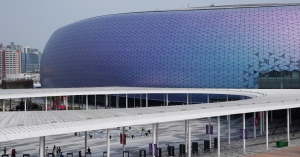
Government celebrates success of Kai Tak Sports Park Mark O'Neill
The Hong Kong government is celebrating the success of the Kai Tak Sports Park which opened in March last year – nearly 600,000 people have attended major sports events there. In a written reply in