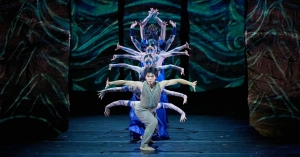

The long-awaited supercomputer centre


This year's Budget proposes to establish an artificial intelligence supercomputer center, and the government says that having sufficient computing infrastructure is a prerequisite for promoting AI development and scientific research. This is good news for Hong Kong I&T, although a little late.
Recently, I reported that the Biodiversity Geographic Information System (BGIS), which I had been waiting for nearly 30 years, would finally be available. But what about the AI supercomputer center?
My old work Hong Kong is “Tech-able” includes an article written in 2011 titled "Building a Supercomputer is Profitable", in which I talked about the signing of a cooperation agreement between the Hong Kong Observatory and Shenzhen Meteorological Bureau. Under the agreement, Hong Kong side was responsible for providing professional knowledge and technology in forecasting as well as staff training for Shenzhen, while Shenzhen side provided high performance computing resources and facilities for the joint development of weather forecasting technology. Shenzhen uses the "Nebula", a supercomputer fully launched in the same year, with computing power equivalent to 200,000 personal computers combined, and claimed to be the mainland's first supercomputer with measured performance exceeding 1,000 trillion times. Since then, part of the weather forecast services provided to Hong Kong people on a daily basis may be based on the calculation results of Nebula.
At that time, I thought that in addition to developing the industry-recommended data center park, Hong Kong should build its own supercomputers, which would be more effective in improving the level of Hong Kong I&T. Because the applications and services of supercomputers, including financial services, industrial design, scientific and medical research, will only increase, supercomputers can support the long-term development of the local I&T industry, making complex products or services that were previously difficult to develop possible, thus driving the overall economic development. It will also enable neighbouring countries to leverage on our resources which could enhance Hong Kong's image as a digital city and Asia's cosmopolitan city, thereby attract overseas investment.
Now, 12 years on, computing power has become the core force driving the development of the digital economy. The 2021 White Paper on China’s Computing Power Development Index by the China Academy of Information and Communications Technology estimates that every dollar invested in computing power would drive economic output of three to four dollars. Moreover, computing power has a significant correlation with the development of the digital economy and gross domestic product (GDP). Of the top 20 countries by computing power in 2021, 17 are among the top 20 economies in the world, and the top five are ranked in unison (the United States, China, Japan, Germany, and the United Kingdom). In addition, the Netherlands, Italy, Australia, Singapore and other countries are also catching up in their computing power rankings.
Today, the scale of computing power in various countries is increasing, and many cities in the mainland are also accelerating their infrastructure. Seven cities, including Shenzhen, Wuhan, Xi'an, Chengdu, Xuchang, Nanjing and Hangzhou, are already operating AI supercomputing centers.
Apparently, Hong Kong is lagging behind, and we must do our best to catch up, the government needed to have vision and prudence to pursue the plan, while the talent training and the positioning of centers are also worth noting. We will talk about it next time.
-- Contact us at [email protected]
-
How should leaders govern the people? Michael Chugani
A senior Mainland official once advised Donald Tsang Yam-kuen when he was the chief executive to think like the people do. It was good advice. Leaders who want to effectively serve the people need to
-
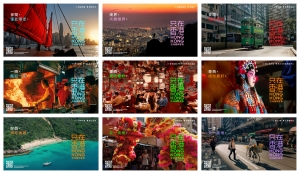
Hong Kong Tourism Board Unveils ‘Only in Hong Kong’
The Hong Kong Tourism Board (HKTB) launched ‘Only in Hong Kong’, a new global campaign that redefines how the city is experienced and differentiating Hong Kong as Asia’s World City. Moving beyond a
-
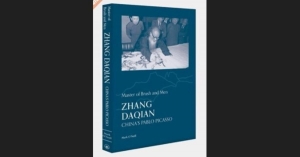
Zhang Daqian, China's Best Painter for 500 Years Mark O'Neill
At Sotheby’s art auction in Hong Kong in April this year, it put on sale three works by Zhang Daqian ( 張大千). One of them, Sunshine after Rain (雨後斜陽), sold for HK$15.36 million. It was evidence that,
-
Government celebrates success of Kai Tak Sports Park Mark O'Neill
The Hong Kong government is celebrating the success of the Kai Tak Sports Park which opened in March last year – nearly 600,000 people have attended major sports events there. In a written reply in