
How the Irish Made Hong Kong

They provided nine of Hong Kong’s 28 governors, cured the city of tuberculosis, built and managed schools that have transformed the lives of tens of thousands of its people and won four Olympic medals.
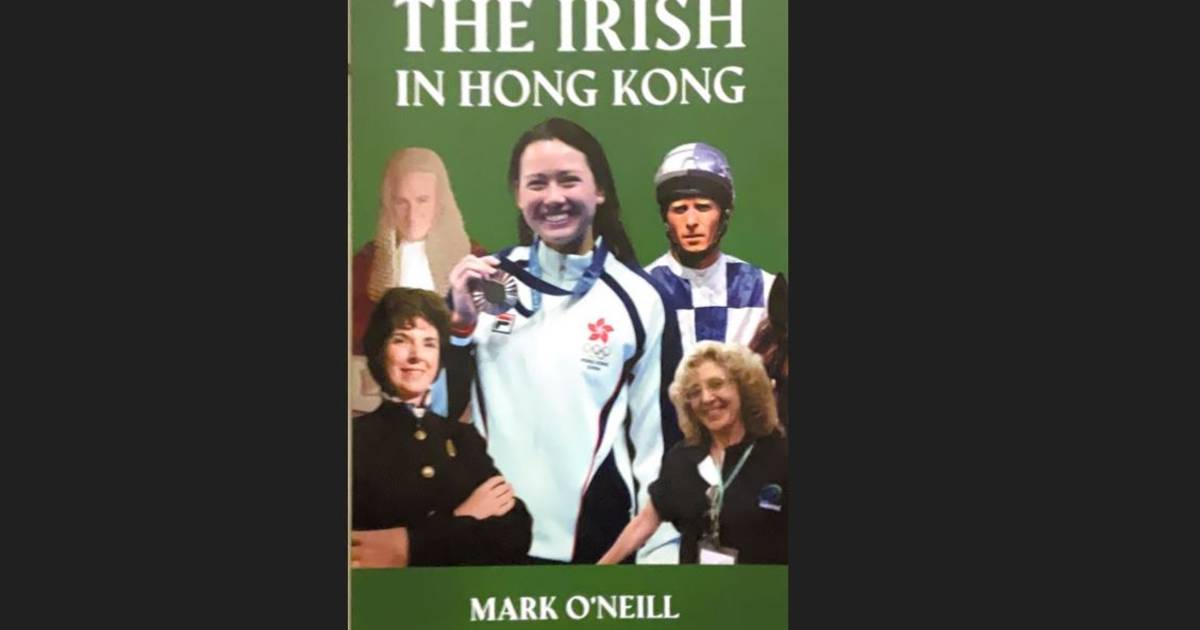
Who are these people? They are the Irish people who have played an extraordinary role in the construction and development of the city. Their story is being told for the first time in “The Irish in Hong Kong”, published this month by Earnshaw Books.
The first governor, Sir Henry Pottinger, was from Northern Ireland. William Caine, the first Chief Magistrate who founded what became the police force, came from County Kildare. From the 1840s to the present day, Irish people have worked here as soldiers, policemen, judges, civil servants, lawyers, businessmen, priests, musicians and jockeys.
They include five Chief Justices, priests who ran the Wah Yan and La Salle schools, champion jockeys, the Belfast woman most responsible for the success of the International Rugby Sevens and the one most familiar to the city’s residents today – Siobhan Haughey.
She is the first Hong Kong athlete to win four Olympic medals, in swimming – two silvers at the 2020 Tokyo games and two bronzes at the Paris 2024 games.
She is the perfect HK-Irish joint venture. Her mother is a Hong Kong lady and her father an Irish accountant. Her paternal granduncle was Charles Haughey, three times Taoiseach (Prime Minister) between 1979 and 1992, a household name in Ireland.
Poolside at the Paris Olympics, she had two teams cheering her on – one from Hong Kong and one from Ireland! She speaks Cantonese, English and Mandarin.
The book was a joint venture between me and David Costello, the second Irish consul-general in the city, between 2018 and 2023. He commissioned the book and contributed greatly to it. We both believed that it was a story that had not been told.
In July 1979, at the Ruttonjee Sanatorium, I had the good fortune to meet Columban Sister Mary Aquinas, a doctor from County Galway. “The last place I wanted to end up was Hong Kong and treating tuberculosis,” she told me. “That is what I have been doing for 30 years.”
She and fellow Columban Sisters from Ireland, aided by their Chinese colleagues, cut the death rate from 208 per 100,000 in 1949, the year of their arrival, to ten per 100,000 in 1979. After World War Two, it was the number one killer in the city.
I also met three of the 106 Irish Jesuits who came to Hong Kong between 1926 and 1970. They have run two of the city’s best secondary schools, Wah Yan, and served the poor, the homeless and the handicapped.
In 1945, one of them, Father Thomas Ryan, became Acting Superintendent of Agriculture. He reforested the city, after thousands of trees had been cut down during the war as fuel, causing serious soil erosion. In 1964, another set up the city’s first credit union. In 1976, a third was appointed to LegCo as a spokesman for working people. He arrived for meetings on a Vespa motorcycle.
The man who turned the Hong Kong and Shanghai Bank into the most important financial institution in Asia in the 19th century was Sir Thomas Jackson, from County Armagh. He was Chief Manager from 1876 to 1902. His statue overlooks Statue Square in Central.
In the 20th century, Sir Arthur Morse, from County Tipperary, was Chief Manager between 1943 and 1953. He saved the bank’s reserves from seizure by the Japanese military and played a major role in rebuilding Hong Kong after World War Two. He extended loans to new arrivals to kickstart the manufacturing sector.
Sir Michael Hogan, from Dublin, was Chief Justice from 1955 to 1969. It was his decision to establish the law faculty at Hong Kong University; it opened the profession to hundreds of young people who could not have afford to study law overseas. Its graduates account for over half of Hong Kong’s legal profession and judiciary; they hold prominent positions in government, politics and business.
Among racegoers, the most popular Irish jockey was Michael Kinane from County Tipperary; he raced here between 1988 and 2007. He achieved 170 wins, including 13 at the top level. “The racing is so competitive and has the best jockeys from around the world based there,” he said. “Horse racing in Hong Kong holds a very unique profile that is unrivalled anywhere in the world.”
Today the Irish imprint in Hong Kong remains strong, with about 5,000 citizens living here. The schools, churches and welfare institutions established by the nuns and priests are flourishing under Hong Kong managers. Wah Yan and La Salle schools are among the top choices for parents.
Many of the most important streets in the city are named for Irish governors – Des Voeux, Hennessy, Bowen, Kennedy, May, MacDonnell, Robinson and Blake.
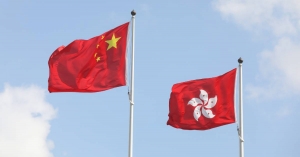
And what is on the Hong Kong flag? It is the Bauhinia Blakeana, named for Sir Henry Blake, from Limerick, governor from 1898 to 1903. In 1908, the head of the Botanical and Forestry Department named the flower after Blake, to thank him and his wife for their support for the city’s Botanical Gardens.
(The book is available at Bookazine, Kelly & Walsh and the Hong Kong Book Centre, and on Amazon)
-
How should leaders govern the people? Michael Chugani
A senior Mainland official once advised Donald Tsang Yam-kuen when he was the chief executive to think like the people do. It was good advice. Leaders who want to effectively serve the people need to
-
Hong Kong Tourism Board Unveils ‘Only in Hong Kong’
The Hong Kong Tourism Board (HKTB) launched ‘Only in Hong Kong’, a new global campaign that redefines how the city is experienced and differentiating Hong Kong as Asia’s World City. Moving beyond a
-
Zhang Daqian, China's Best Painter for 500 Years Mark O'Neill
At Sotheby’s art auction in Hong Kong in April this year, it put on sale three works by Zhang Daqian ( 張大千). One of them, Sunshine after Rain (雨後斜陽), sold for HK$15.36 million. It was evidence that,
-
Government celebrates success of Kai Tak Sports Park Mark O'Neill
The Hong Kong government is celebrating the success of the Kai Tak Sports Park which opened in March last year – nearly 600,000 people have attended major sports events there. In a written reply in