
China in Europe – The Lion Eats the Zebra

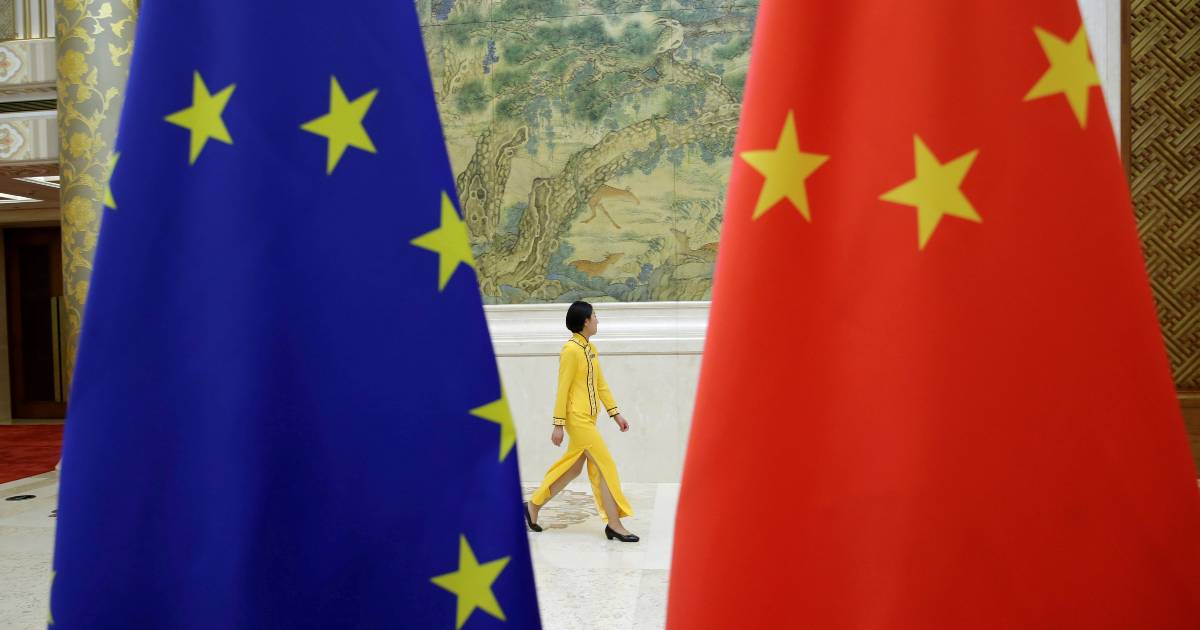
“Our trade deficit with China was more than one billion euros a day in July. This trade rebalancing is becoming existential for Europe.” -- the words of Stephane Sejourne, EU Commission Executive Vice President for Prosperity and Industrial Strategy on September 24.
“The EU lost 250,000 industrial jobs last year and is losing thousands of jobs a week,” he said in an interview.
Earlier this month, the EU asked Beijing to restrict sales of China-made hybrid vehicles to about 15 per cent of the EU market compared with more than a third today. Beijing is unlikely to agree.
Some countries in Europe have adopted a different strategy. Spain is one. Chery Auto, China’s biggest auto exporter, has bought a former Nissan plant in the Zona Franca of Barcelona and is investing 400 million euros there with local firm Ebro-EV Motors to build EVs.
In the Spanish city of Zaragoza, CATL is investing 4.1 billion euros in a lithium iron phosphate (LFP) battery gigafactory in a 50-50 joint venture with automotive conglomerate Stellantis. The largest plant of its kind in Spain, it will supply batteries for Stellantis EV passenger cars, crossovers and SUVs.
The Spanish government is providing funding of 300 million euros to the project.
In Hungary, BYD is building its first European EV plant in Szeged, with production due to begin in the last quarter of this year. In 2025, BYD's sales in Europe grew 270 per cent to almost 188,000 vehicles. In the first five months of this year, European sales rose 144 per cent over the same 2025 period to over 100,000 units.
In Slovakia, Gotion High-Tech is investing 1.234 billion euros in a gigafactory in Surany to make LFP batteries. Volkswagen’s battery division PowerCo has acquired a 49 per cent stake in the plant.
The governments of these three countries have decided that, rather than fight the Chinese invaders, it is better to co-operate with them.
Michael McAdoo, director at Boston Consulting, said that, the further you went from Brussels, the less China was considered a ‘systemic rival’. “Madrid and Budapest are pragmatic and see Beijing primarily as a provider of investment.”
For the Chinese companies, the plants are a way to produce inside the EU and avoid tariffs and other protective measures that the Commission may introduce.
Pierre Jouvey, a Socialist member of the European Parliament said; “China shows once again that it is better prepared and more serious than the EU in promoting ‘Made in Europe’.”
In March this year, the European Commission adopted the Industrial Accelerator Act, adopted by the Commission. It aims to accelerate the decarbonisation and expansion of Europe’s industrial capacity while strengthening supply chains in strategic sectors.
It aims to raise the share of industrial manufacturing in the EU economy from 14.3 per cent in 2024 to 20 per cent by 2035. It focuses heavily on energy-intensive industries, like steel, cement, aluminium, and chemicals, net-zero technologies and the auto sector.
It introduces phased "Made in EU" local-content rules and verified low-carbon standards for public procurement and public support schemes starting around 2029. It imposes strict approval requirements and local-value conditions -- such as R&D spending or workforce thresholds -- on investments exceeding €100 million in strategic sectors where a single third-country supplier holds over 40 per cent of global capacity.
Its main target is evidently China.
With access to the U.S. market restricted in many sectors to Chinese firms, the EU has become their primary target. Last year, China’s globa; outbound direct investment reached a record US$174.4 billion, up 7.1 per cent on a year earlier.
Two European economists, Jean Tirole and Karine Van Der Straeten, have found a new way to describe the plight of European economies. Tirole won the Nobel Prize for economics in 2014 and Van Der Straeten leads the foundation of the Toulouse School of Economics.
“In the savannah, the lion does not attack the elephant or the mouse. The elephant is too dangerous and the mouse has too little nutrition. It is the zebra, robust, well fed and without real defence, who pays the price of his intermediate position.”
The lions are the U.S. and China and the zebras the middle-size countries of Europe.
-
How should leaders govern the people? Michael Chugani
A senior Mainland official once advised Donald Tsang Yam-kuen when he was the chief executive to think like the people do. It was good advice. Leaders who want to effectively serve the people need to
-

Hong Kong Tourism Board Unveils ‘Only in Hong Kong’
The Hong Kong Tourism Board (HKTB) launched ‘Only in Hong Kong’, a new global campaign that redefines how the city is experienced and differentiating Hong Kong as Asia’s World City. Moving beyond a
-
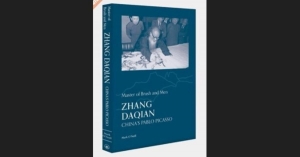
Zhang Daqian, China's Best Painter for 500 Years Mark O'Neill
At Sotheby’s art auction in Hong Kong in April this year, it put on sale three works by Zhang Daqian ( 張大千). One of them, Sunshine after Rain (雨後斜陽), sold for HK$15.36 million. It was evidence that,
-
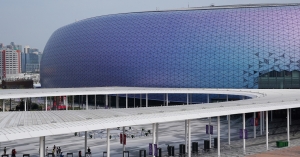
Government celebrates success of Kai Tak Sports Park Mark O'Neill
The Hong Kong government is celebrating the success of the Kai Tak Sports Park which opened in March last year – nearly 600,000 people have attended major sports events there. In a written reply in