
Renault vows to fight Chinese predators in Europe

French automaker Renault has twice refused offers by BYD to invest in its European operations and vows to retain its independence from Chinese automakers despite their technological prowess.
Renault is the third largest automaker in Europe, with sales in 2025 of 2.34 million units, after 8.98 million by Volkswagen, 5.48 million by Stellantis, and 4.6 million by BYD.
It has lost two of its major markets. In December 2020, it lost China by ending its 50-50 joint venture with Dongfeng Motor through selling its share to its jv partner. After Putin’s invasion of Ukraine, it left Russia in spring 2022 -- giving up nearly 20 per cent of its global sales.
All this makes it especially vulnerable to the invasion of Chinese EVs into Europe, the market which accounted for 64 per cent of its sales last year. It and other makers lobbied successfully with the European Commission to impose a tariff of up to 45 per cent on imports of Chinese EVs.
Francois Provost took over as CEO of Renault in July 2025. “I want to prove that a European manufacturer can make vehicles at the same level of competitivity as the Chinese,” he said. “We will produce on the European continent, with our own technology.”
To achieve this, he has followed the Chinese model – cut production costs by 20 per cent and 30 per cent fewer components per model by 2030, a maximum of two years for each new model and learn from the R & D of Chinese engineers. The firm has invested heavily in electric vehicles, using Chinese components.
One of its most successful EVs is the Twingo, a five-door hatchback, which is produced in Slovenia and sells from less than 20,000 euros. Another is the R5.
In the third quarter of this year, its EV sales in Europe grew 85 per cent year-on-year because of the higher fuel prices caused by the wars in Ukraine and Iran. “We have invested heavily in EVs,” Provost said. “Renault will continue to lead the trend on EVs.
Drivers have a stronger emotional connection with our cars compared with newer offerings from China, he said.
Another part of its strategy is to sell more cars outside Europe -- in Latin America, South Korea, India, Turkey, Morocco and India.
Brazil is a major market, where it has over 250 dealerships. In November 2025, Geely Auto acquired a 26.4 per cent minority stake in Renault do Brasil, based in Parana, south of Sao Paulo. By 2027, the two firms will have invested 899 million euros in the factory.
This modernisation has enabled it to use Geely’s Global Intelligent Electric Architecture platform, allowing it to produce the full range of vehicles, from combustion engines to plug-in hybrids and 100-per-cent electric vehicles. This allows Geely to produce cars in Brazil and avoid high import tariffs, while Renault has access to Geely’s EV technology.
In the near future, the factory will produce a new Renault entirely made on the Geely platform. It will be sold only in Brazil.
Provost said that his company would not repeat such Chinese investment in Europe. “What we did with the Chinese in Brazil we will never do in Europe. There we wish to remain sovereign in our technology.”
According to the French financial newspaper Les Echos, BYD has twice tried to take a stake in Renault, once in the summer of 2024 and the second time in the autumn of 2025. Each time, Renault refused the offer. Neither company has confirmed the discussions.
The appeal for Renault would have been access to BYD’s electric-battery and plug-in hybrid technology. BYD would have gained entry into Renault’s European factories.
But Renault believed that, while the offer on the table was a partial stake, BYD’s long-term aim was a takeover – its overall production is double that of the French firm.
For Provost, alliances outside Europe are welcome but not in its home market. That is a red line. The French government is the largest single shareholder in Renault, with 15.01 per cent, ahead of Japanese automaker Nissan with 15 per cent. Its employees hold 6.12 per cent, with the rest held by investors in shares traded publicly.
This makes a stake by a Chinese automaker like BYD a matter of government policy.
For the first nine months of this year, the company reported group revenue of 41.8 billion euros, up 7.1 per cent over the same 2025 period, with auto revenue of 36.6 billion, up 6.6 per cent.
Can the company preserve its independence from Chinese predators? This is Provost’s answer: “Size is not such a significant factor as before. What counts is agility and speed of execution.”
-
How should leaders govern the people? Michael Chugani
A senior Mainland official once advised Donald Tsang Yam-kuen when he was the chief executive to think like the people do. It was good advice. Leaders who want to effectively serve the people need to
-
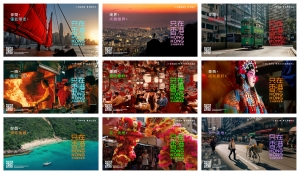
Hong Kong Tourism Board Unveils ‘Only in Hong Kong’
The Hong Kong Tourism Board (HKTB) launched ‘Only in Hong Kong’, a new global campaign that redefines how the city is experienced and differentiating Hong Kong as Asia’s World City. Moving beyond a
-
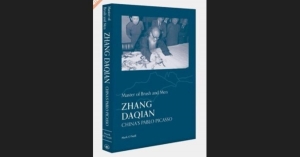
Zhang Daqian, China's Best Painter for 500 Years Mark O'Neill
At Sotheby’s art auction in Hong Kong in April this year, it put on sale three works by Zhang Daqian ( 張大千). One of them, Sunshine after Rain (雨後斜陽), sold for HK$15.36 million. It was evidence that,
-
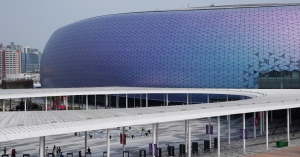
Government celebrates success of Kai Tak Sports Park Mark O'Neill
The Hong Kong government is celebrating the success of the Kai Tak Sports Park which opened in March last year – nearly 600,000 people have attended major sports events there. In a written reply in