
Czech National Ballet’s Balanchine Programme

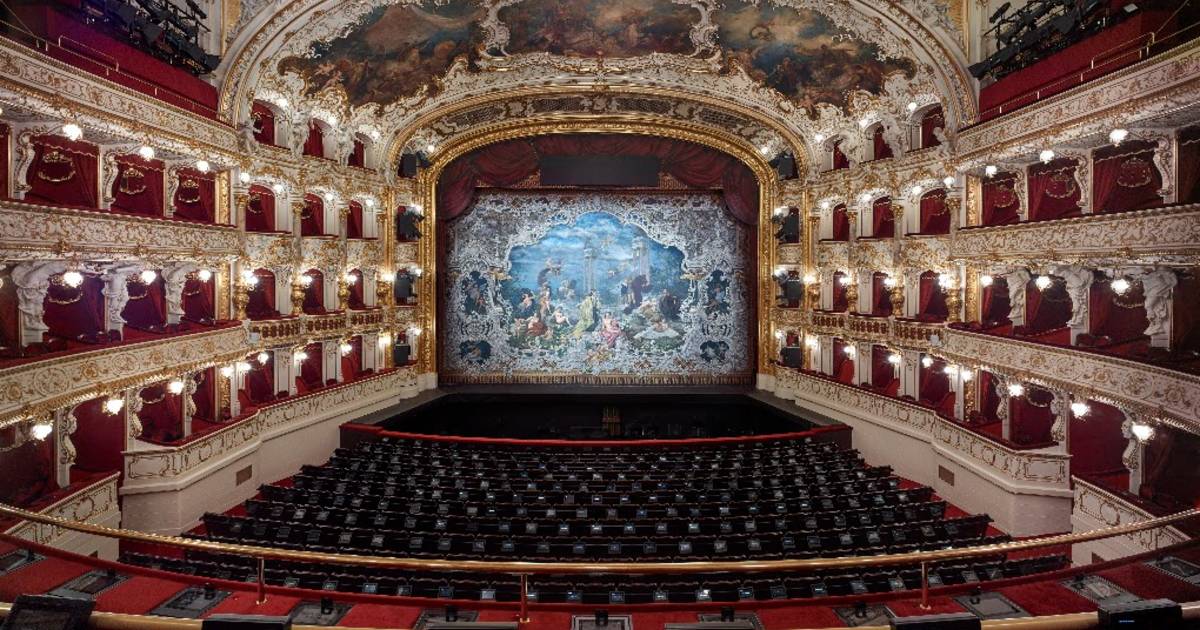
The Czech National Ballet appeared in the Hong Kong Arts Festival last year, and impressed local audiences with its performances of the 19th century classic “La Sylphide”. After a year, it was a joy to see the company again in one of its home theatres – the grand Statni Opera (State Opera) in Prague, the capital of the Czech Republic.
This historic 19th century opera house is worth a visit just to see its lavish interior. With its spacious auditorium and elaborate Neo-Rococo style decor, the State Opera is one of the most beautiful opera houses in Europe.
In early November I caught the final two Saturday performances of the programme “Who Cares?” which was a tribute to George Balanchine, the greatest ballet choreographer of the 20th century. This programme, which premiered in Prague in June, presents two contrasting poles of Balanchine’s neo-classical aesthetic. Both works were staged by Nilas Martins and Christian Tworzyanski from the George Balanchine Trust.
The majestic “Brahms-Schoenberg Quartet”, created exactly 60 years ago in 1966, is a melancholic evocation of the elegance of old Europe. And the 1970 ballet “Who Cares?” is a joyful celebration of Jazz Age Manhattan and the timeless melodies of George Gershwin. Uniting both works is Balanchine’s sense of a classical perspective, and his profound belief in the humanity of dance.
“Brahms-Schoenberg Quartet” is about Vienna. For this ballet, the famed fashion designer Karl Lagerfeld created sets and costumes inspired by the Viennese palaces and villas. Set in twilight which is perhaps symbolic of the faded grandeur of old Europe, it seems to travel through the spatial boulevards and beautiful gardens of this great city.
It is an excellent work for a large company spanning a variety of moods. Each of the four movements is self-contained and led by a different set of principal dancers. The first movement is a romantic ballroom scene. The second movement is intimate and is like an extended duet, while the third movement has formal beauty for the female corps de ballet. The last movement is a triumphant Hungarian dance.
And it is an ideal showcase to display the strength of the Czech company. The company danced with a grand expansiveness. In the evening cast in particular, Junta Noda was spectacular in his solo in the third movement. In the final movement, Nina Fernandes and Matej Sust were outstanding as the leading couple. Sust had dazzling virtuosity, while Fernandes was sharp and precise. In the afternoon, John Powers impressed in the second movement.
In 1970 Balanchine made a ballet out of selections from the composer George Gershwin’s 1932 songbook as orchestrated by Hershy Kay, and named it “Who Cares?”. The title evokes the hedonism of the elegance of the 1920s when American musical comedy was flourishing. A backdrop shows the Manhattan night view including the Chrysler Building.
After the first half which consists of ensemble dancing, the second half becomes warmer and more romantic and features a leading man and three women as in Balanchine’s masterpiece “Apollo”. The man dances a duet with each of the three women who each has a solo.
The first duet “The Man I Love” is most expressive. It’s almost like an entire love story told from the beginning to the end. In the matinee cast, Matej Sust and Natsuki Nishiyama were superb in this duet.
In the evening performance, Paul Irmatov was most stylish as the leading man, and was excellent in the three duets. Alina Nanu was dazzling in her solo “My One and Only”, while Aya Okumura impressed in her solo “Fascinatin’ Rhythm”. The whole cast was dancing splendidly with glamour. There is nothing like great choreography to show off a company at its best.
It is praiseworthy of Filip Barankiewicz, the company’s artistic director, to select both works which are not among Balanchine’s most famous masterpieces but are immensely rewarding for the dancers and audience alike. Balanchine’s choreography in both ballets is timeless. The State Opera Orchestra was impressive under the baton of Vaclav Zahradnik.
The Czech National Ballet is an excellent company full of good and talented dancers, and has a diverse repertory. Hopefully it can tour Hong Kong again in the not too distant future.
Photo by Filip Slapal – State Opera in Prague
-
How should leaders govern the people? Michael Chugani
A senior Mainland official once advised Donald Tsang Yam-kuen when he was the chief executive to think like the people do. It was good advice. Leaders who want to effectively serve the people need to
-

Hong Kong Tourism Board Unveils ‘Only in Hong Kong’
The Hong Kong Tourism Board (HKTB) launched ‘Only in Hong Kong’, a new global campaign that redefines how the city is experienced and differentiating Hong Kong as Asia’s World City. Moving beyond a
-

Zhang Daqian, China's Best Painter for 500 Years Mark O'Neill
At Sotheby’s art auction in Hong Kong in April this year, it put on sale three works by Zhang Daqian ( 張大千). One of them, Sunshine after Rain (雨後斜陽), sold for HK$15.36 million. It was evidence that,
-
Government celebrates success of Kai Tak Sports Park Mark O'Neill
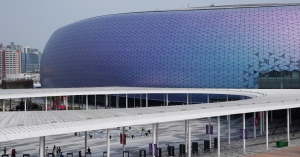
The Hong Kong government is celebrating the success of the Kai Tak Sports Park which opened in March last year – nearly 600,000 people have attended major sports events there. In a written reply in