
Will France need European Central Bank bail-out?

“I am head of a state that is in a position of collapse. This cannot go on.”
That was Francois Fillon, Prime Minister of France in September 2007. That year its national debt was 1.212 trillion euros, 64.2 per cent of the country’s GDP.
But the situation did go on. The governments that followed Fillon’s tried but failed to bring down the debt. In October 2026, it reached a record 3.6 trillion euros, 119.3 per cent GDP.
The financial markets are sceptical governments will be able to cut the debt. In October, the 10-year government bond yield rose to almost five per cent in October from an average of 3.4 per cent in 2025 while the spread to Bunds (long-term debt) widened to about 140 basis points, a historical high.
Prime Minister Sebastien Lecornu is working through Parliament the 2027 budget. It aims to reduce the deficit to 5.0 per cent of GDP and comply with EU’s net expenditure rule. It contains 43 billion euros of new savings. including politically difficult measures, such as freezing public-sector wages, under-indexation of pensions above 1,260 euros a month, and extending the special tax on large companies.
“France has collapsed and is threatened with bankruptcy,” said L’Express magazine in an editorial this month. “Each government has promised to reduce the debt. In their defence, they invoke Covid, droughts, the wars in Ukraine and Iran and dissolutions of parliament, but no-one believes them.
“Especially not our European partners, those who have succeeded, through budgetary cuts and unpopular reforms, to clean up their public finances,” it said.
After the 2008/2009 financial crisis, the European Central Bank (ECB) provided billions of euros in credit to Greece, Italy, Portugal, Ireland, Spain and Cyprus to maintain the euro. These countries had to implement austerity programmes that were deeply unpopular.
France is trying to find a way to cut its enormous pension bill. Currently, it costs 482 billion euros a year, 14.1 per cent of GDP, about a quarter of total public spending. That is one of the highest levels among OECD countries and compares to five per cent in Britain.
Despite strong public protest, the government in 2023 raised the legal retirement age from 62 to 64. Marine Le Pen, the far-right candidate likely to become President in May 2027, has promised to bring the age back down to 62.
Jean-Luc Melanchon, the far-left candidate likely to be her main opponent in the election, has promised to bring the age down to 60. He has proposed annulling 600 billion euros in national debt, an idea rejected by the ECB, other political parties and economists.
The average life expectancy in France is 83.6 years, one of the highest in the world, compared to 74.1 in 1980. Pensioners in France are well organised and among the most active voters in elections.
Of the budget of the Ministry of Education, 32 per cent goes on pensions for civil servants, crowding out money that could be used to improve schools.
Vincent Pons, a professor at Harvard Business School, said that France must reduce its pension bill and redirect the money to other sectors, including education. “It is an aberration to direct more money to pensioners, at the expense of younger members of the population.”
Economist Mario Monti was Prime Minister of Italy from November 2011 to April 2013, at the height of the European sovereign debt crisis.
“At that time, everyone in Italy was very aware of the financial crisis. Taxi drivers in Milan and Rome told you all about it. But France is not aware enough of the risk.
“I hope responsible politicians in France will understand and explain to the public the risks for the younger generation. The ideal would be that all the parties agree to assume the political cost of cutting the debt,” he said.
He said that, if there was a crisis in the Eurozone provoked by the fall of France, the loss of credibility would be enormous. “France would find itself under the control of the IMF, Neither the U.S, of Trump nor the China of Xi Jinping would lift a finger.
“I am surprised that there is not a serious debate in France over the catastrophe that a financial crisis would mean for its prestige, its pride and its economic and political position,” he said.
This is the poisoned chalice that awaits the new French president who will take office in May next year.
-
How should leaders govern the people? Michael Chugani
A senior Mainland official once advised Donald Tsang Yam-kuen when he was the chief executive to think like the people do. It was good advice. Leaders who want to effectively serve the people need to
-

Hong Kong Tourism Board Unveils ‘Only in Hong Kong’
The Hong Kong Tourism Board (HKTB) launched ‘Only in Hong Kong’, a new global campaign that redefines how the city is experienced and differentiating Hong Kong as Asia’s World City. Moving beyond a
-
Zhang Daqian, China's Best Painter for 500 Years Mark O'Neill
At Sotheby’s art auction in Hong Kong in April this year, it put on sale three works by Zhang Daqian ( 張大千). One of them, Sunshine after Rain (雨後斜陽), sold for HK$15.36 million. It was evidence that,
-
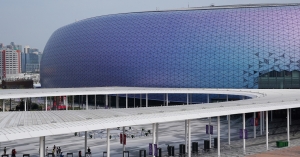
Government celebrates success of Kai Tak Sports Park Mark O'Neill
The Hong Kong government is celebrating the success of the Kai Tak Sports Park which opened in March last year – nearly 600,000 people have attended major sports events there. In a written reply in