
Mighty Russia relies on tiny North Korea

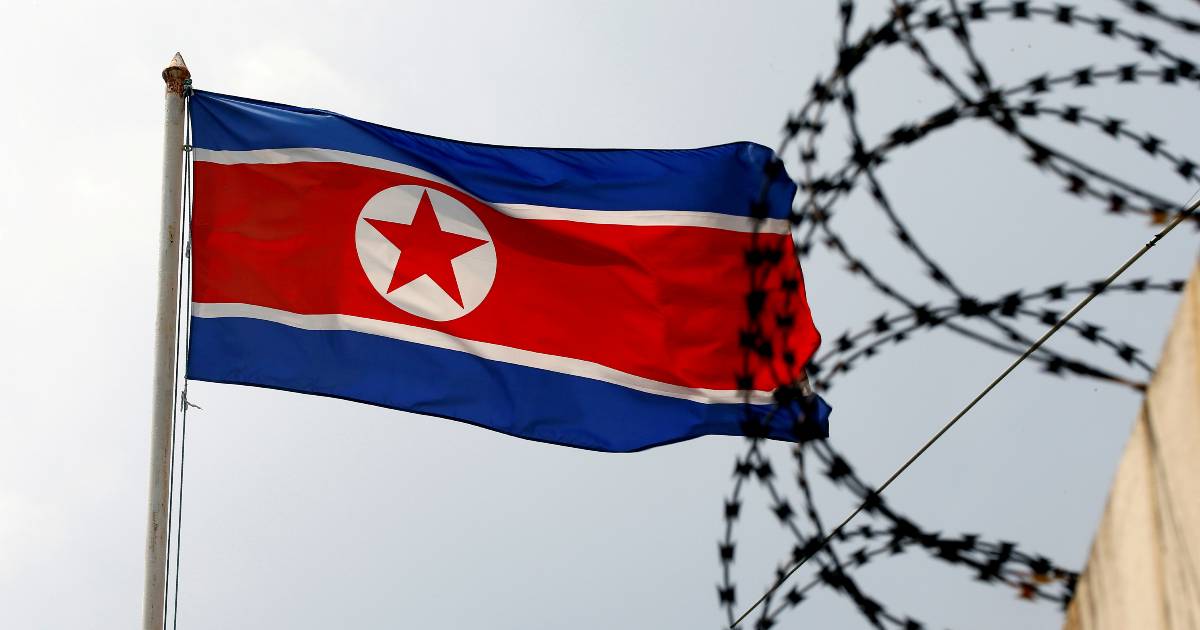
More than 10,000 North Koreans are assembling drones at a plant in southern Russia that kill Ukrainian civilians every day, part of an army of workers aiding Russia’s war effort.
They work at the Yelabuga drone factory in the Alabuga Special Economic Zone in Tatarstan and produce Shahed attack and reconnaissance drones, with output of about 1,000 per month. Assembling the drones requires a large number of low-paid workers.
Last month the Multilateral Sanctions Monitoring Team (MSMT) of the U.N. Security Council issued a report saying that those in the drone factory were among the estimated 30,000 North Korean workers in Russia.
With 1.6 million men killed or wounded in the war and tens of thousands of men having fled the country, Russia has a chronic shortage of labour. Next to the Koreans in Yelabuga are people from other countries, including hundreds of Ugandan women.
North Korea is supplying Russia not only with workers but also multiple-rocket launchers, short-range ballistic missiles and tens of thousands of shells each month.
The increasing dependence of mighty Russia on tiny North Korea is one of the most astonishing results of its invasion of Ukraine in February 2022.
Russia is the largest country on earth, with 17 million square kilometres of land and a population of 147 million. North Korea has 121,000 square kilometres of land and a population of 26 million.
North Korea owes its creation in 1945 to Soviet dictator Josef Stalin who chose Kim Il-sung as its leader Moscow supported it for the next 40 years. But, after the collapse of the Soviet Union in 1991, it abandoned North Korea. Since then, it has relied on China for its survival.
Things changed abruptly after 2022. As Russia ran out of soldiers and workers, it scoured the world for them. It has recruited about 46,000 soldiers from 150 countries. Untrained, in a foreign land and not speaking Russian, they have been of limited military use.
No government, including Belarus and other former countries of the Soviet Union, was willing to send its regular army to fight in Ukraine.
Only Kim Jong-un agreed. In October 2024, he sent 16,000 soldiers. Well-disciplined and trained, they were an asset to the Russian army. About 1,000 died and 4,000 were wounded. Ukraine says that a further 10,000 have been sent this year.
The workers are no less invaluable. The MSMT report said that, in addition to making drones, the North Koreans work in other defence plants, steel mills and make ships and in construction projects in Russian-occupied parts of Ukraine.
For a war economy, they are ideal workers – they are under constant surveillance by NK security police, not allowed contact with Russians, restricted in their movements and housed in closed dormitories to which outsiders have no access.
Song Young-chae, a Seoul academic, said: “the North Korean regime is selling the labour of its citizen, controlling whether they may leave and collecting most of their wages. This is the definition of forced labour. Pyongyang is conducting slavery of its own people and for its own profit.”
The MSMT report said that the average annual income of the North Korean workers was about US$7,500. Of this, up to 90 per cent is retained by Pyongyang. In 2025, it received US$800 million from the labour of its citizens abroad, money it spent on its nuclear and missile programmes.
On September 7 this year, North Korea and Russia opened their first road bridge between their two countries across the Tumen river. The two-lane bridge runs one kilometre. It is close to a railway bridge that was previously the only direct land link. The prime ministers of the two countries tuned it by video to salute the occasion. This will facilitate the import of North Korean labour into Russia.
The rail bridge, opened in 1959, used to be the sole border crossing. By special arrangement, planks could be placed over the rails to allow vehicles to cross.
Then there is the moral question. Ukraine and North Korea had and have no conflict, nor have Ukrainians harmed North Koreans. As part of the Soviet Union, Ukraine supported North Korea and hosted its young people who went there to study. Why should North Koreans make weapons and drones that kill Ukrainians, both soldiers and civilians?
If relatives of those killed by the drones ask why they made them, how will they answer?
-
How should leaders govern the people? Michael Chugani
A senior Mainland official once advised Donald Tsang Yam-kuen when he was the chief executive to think like the people do. It was good advice. Leaders who want to effectively serve the people need to
-
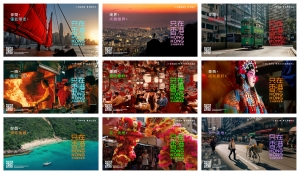
Hong Kong Tourism Board Unveils ‘Only in Hong Kong’
The Hong Kong Tourism Board (HKTB) launched ‘Only in Hong Kong’, a new global campaign that redefines how the city is experienced and differentiating Hong Kong as Asia’s World City. Moving beyond a
-
Zhang Daqian, China's Best Painter for 500 Years Mark O'Neill
At Sotheby’s art auction in Hong Kong in April this year, it put on sale three works by Zhang Daqian ( 張大千). One of them, Sunshine after Rain (雨後斜陽), sold for HK$15.36 million. It was evidence that,
-
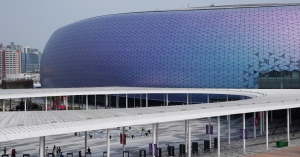
Government celebrates success of Kai Tak Sports Park Mark O'Neill
The Hong Kong government is celebrating the success of the Kai Tak Sports Park which opened in March last year – nearly 600,000 people have attended major sports events there. In a written reply in